

Every year, as temperatures shift and homeowners adjust their thermostats, the same question surfaces in workshops, trade conversations, and kitchen-table discussions: is annual HVAC maintenance actually worth the time and expense? For people who understand heating and cooling systems beyond the surface level, this question deserves a serious, experience-based answer. HVAC systems are not simple appliances. They are mechanical systems designed to perform within narrow operating tolerances over long periods of time. Whether maintenance is worthwhile depends on how you define value, and value in HVAC has far more to do with consistency, efficiency, and longevity than whether a system happens to run today.
Heating and cooling equipment does not suddenly fail without cause. Performance changes happen gradually. Airflow becomes slightly restricted. Electrical components drift out of specification. Coils lose some of their ability to transfer heat efficiently. These changes are subtle, often unnoticed by homeowners, yet they directly affect how hard the system works and how long it lasts. Annual maintenance exists to identify and correct these small deviations before they accumulate into larger, more expensive problems.
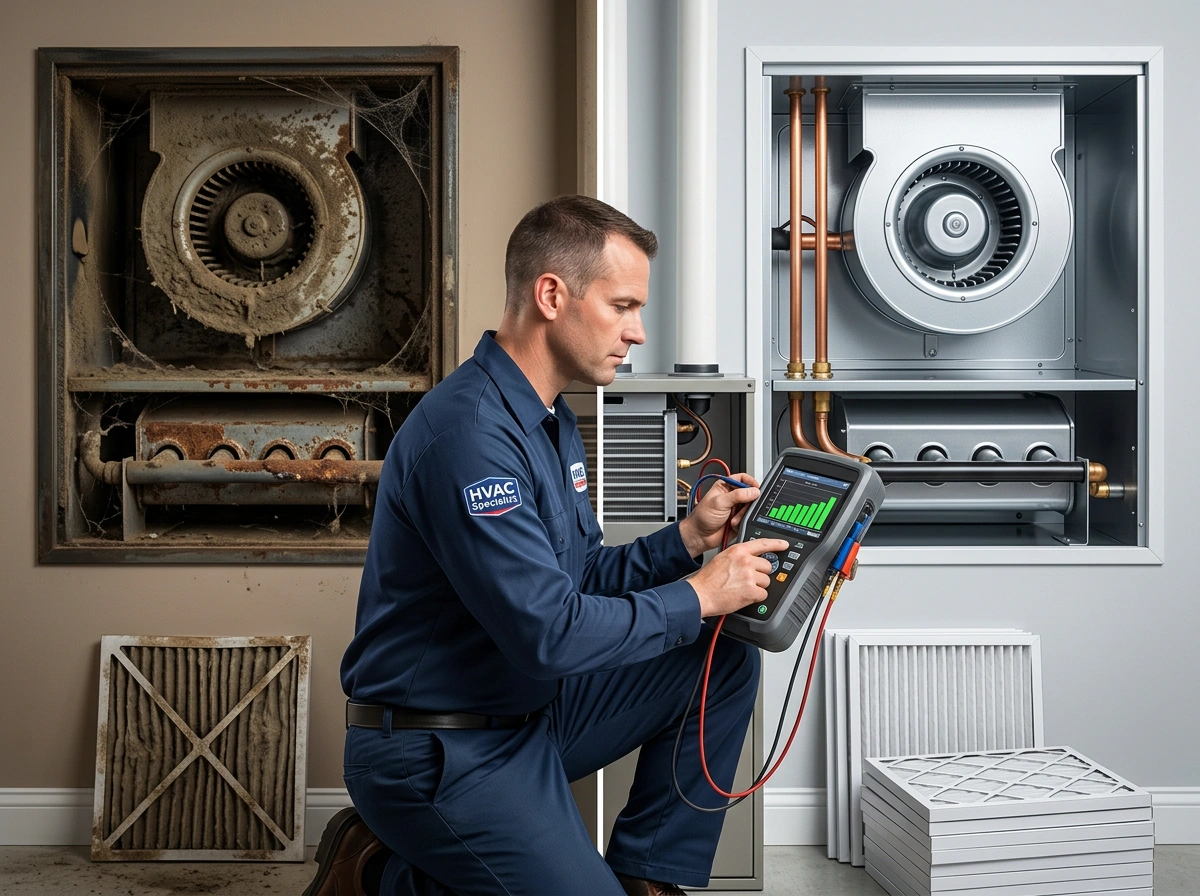
An HVAC system is engineered to move a specific volume of air across heat exchange surfaces at precise temperatures and pressures. When everything is clean, calibrated, and properly adjusted, the system delivers comfort using the least amount of energy required. Over time, that balance shifts. Filters load with debris. Dust settles on evaporator and condenser coils. Blower assemblies lose efficiency as resistance increases. None of this prevents the system from operating, but it does change how much effort is required to achieve the same result.
When airflow is restricted or heat transfer is compromised, the system compensates by running longer. Longer run times increase electrical consumption and place additional stress on major components such as compressors and motors. This is one of the most common reasons homeowners see rising energy bills even when their habits have not changed. Annual maintenance restores the system closer to its intended operating condition. Cleaning coils improves heat transfer. Checking static pressure and airflow helps ensure the system is not working against unnecessary resistance. Electrical testing confirms that motors and compressors are drawing power within expected ranges.
Efficiency gains from maintenance are rarely dramatic in a single billing cycle, but they are consistent over time. HVAC professionals who track performance data see the same pattern repeatedly. Maintained systems reach temperature setpoints faster, cycle more predictably, and consume less energy under similar conditions. For homeowners who care about operational efficiency, maintenance is one of the few variables they can directly control.
Reliability is where the practical value of annual maintenance becomes most apparent. HVAC systems tend to fail during periods of peak demand, when outdoor temperatures push equipment to its limits. These failures are rarely random. They are often the result of components that have been operating under stress for months or years. Capacitors weaken. Contactors wear down. Bearings lose lubrication. Sensors drift out of calibration. Each of these issues can be detected during routine service before they lead to a system shutdown.
Annual maintenance allows technicians to evaluate how the system behaves under normal operating conditions. Measuring voltage, amperage, temperature differentials, and refrigerant pressures provides insight into the health of critical components. Addressing a marginal part during scheduled service is far less disruptive than dealing with a breakdown during extreme heat or cold. From a reliability standpoint, maintenance shifts HVAC ownership away from emergency response and toward planned care.
Safety is equally important, particularly for heating systems that rely on combustion. Gas furnaces and similar equipment require proper airflow, ignition, and venting to operate safely. Annual inspections include checks for heat exchanger integrity, correct burner operation, and proper exhaust flow. These checks help ensure combustion byproducts are safely directed outside the home. Even in electric systems, safety inspections matter. Loose connections, damaged wiring, or failing control boards can create hazards if left unaddressed. Maintenance reduces these risks by verifying that electrical and safety controls are functioning as designed.
Equipment lifespan is closely tied to both efficiency and reliability. Components that operate under higher loads experience accelerated wear. Compressors that run hotter than intended break down faster. Motors that work against restricted airflow fail sooner. Heat exchangers exposed to uneven temperature changes degrade over time. Annual maintenance helps keep these components within their intended operating ranges, supporting the full service life manufacturers expect when systems receive proper care. For homeowners, this can mean several additional years of reliable operation before replacement becomes necessary.
Environmental conditions play a significant role in how HVAC systems perform and age. In coastal regions, high humidity and extended cooling seasons place additional demands on equipment. Moisture increases the risk of corrosion and affects how effectively systems manage condensate. Drain lines, pans, and coils are all vulnerable to buildup and blockage when moisture is present for long periods. Annual maintenance allows technicians to inspect and clean these components, reducing the likelihood of water damage or efficiency loss.
Indoor air quality is another area influenced by regular service. HVAC systems move large volumes of air through a home, and whatever is in that air eventually settles on internal components. Dust, pollen, and other airborne particles accumulate over time, restricting airflow and reducing system performance. Maintenance addresses these issues by cleaning key surfaces and ensuring air moves freely through the system. In humid climates, controlling moisture inside the system also helps limit conditions that allow microbial growth. Clean systems move air more effectively and support healthier indoor conditions.
Warranty considerations add a practical dimension to the maintenance discussion. Many HVAC manufacturers specify routine maintenance as a condition of warranty coverage. Without documentation showing that the system has been serviced according to guidelines, homeowners may be responsible for repair costs that would otherwise be covered. Annual maintenance provides a clear service record that aligns with manufacturer requirements. This documentation can make a meaningful difference if a major component fails unexpectedly.
It is not uncommon to hear homeowners say that their system has run for years without maintenance and continues to operate. While that can be true, it does not reflect the full picture. A system can continue to heat or cool while operating below its intended efficiency, consuming more energy, and placing unnecessary stress on components. Maintenance is about preserving performance that quietly declines when systems are left unattended.
From a financial perspective, annual maintenance is a modest, predictable expense compared to the cost of emergency repairs or premature system replacement. When energy savings, reduced breakdowns, extended equipment life, and warranty protection are considered together, maintenance often offsets its own cost over time. For those familiar with mechanical systems in any industry, this principle is well established. Preventive care reduces long-term risk and expense.
So, is annual HVAC maintenance really worth it? When efficiency, reliability, safety, climate conditions, air quality, and equipment longevity are considered as a whole, the answer becomes clear. Annual maintenance supports how HVAC systems are designed to operate and helps preserve consistent performance year after year. It reduces uncertainty, protects a significant household investment, and ensures systems are prepared for the conditions they face.
For homeowners looking to maintain dependable comfort and consistent system performance in Gulf Coast conditions, routine professional care makes a meaningful difference. Gulf Coast Heating & AC in Pinellas Park, FL, provides knowledgeable service backed by local experience, helping homeowners stay ahead of wear caused by heat, humidity, and year-round use. Contact us today to schedule service or speak with experienced technicians who can help you take a proactive approach to protecting both your comfort and your HVAC equipment.
We are located here:

