

Anyone who manages a commercial property along the Gulf Coast understands how challenging heat and humidity can be. During the warmer months, stepping outside often means immediately feeling the weight of moisture in the air. While most business owners recognize that high temperatures increase the demand on their cooling systems, humidity is often the less obvious factor affecting indoor comfort, energy consumption, and overall HVAC performance. For commercial buildings, humidity is more than a comfort issue. Excess moisture in the air directly affects how efficiently a cooling system operates and how comfortable occupants feel inside the building. No matter if it’s an office, retail store, restaurant, healthcare facility, warehouse, or educational institution, maintaining proper humidity levels is essential for creating a productive environment and protecting the long-term performance of HVAC equipment. Many business owners first notice humidity-related problems when occupants begin complaining about comfort. The thermostat may indicate that indoor temperatures are where they should be, yet employees still feel warm, customers seem uncomfortable, or certain areas of the building feel damp. In these situations, humidity is often the missing piece of the puzzle.
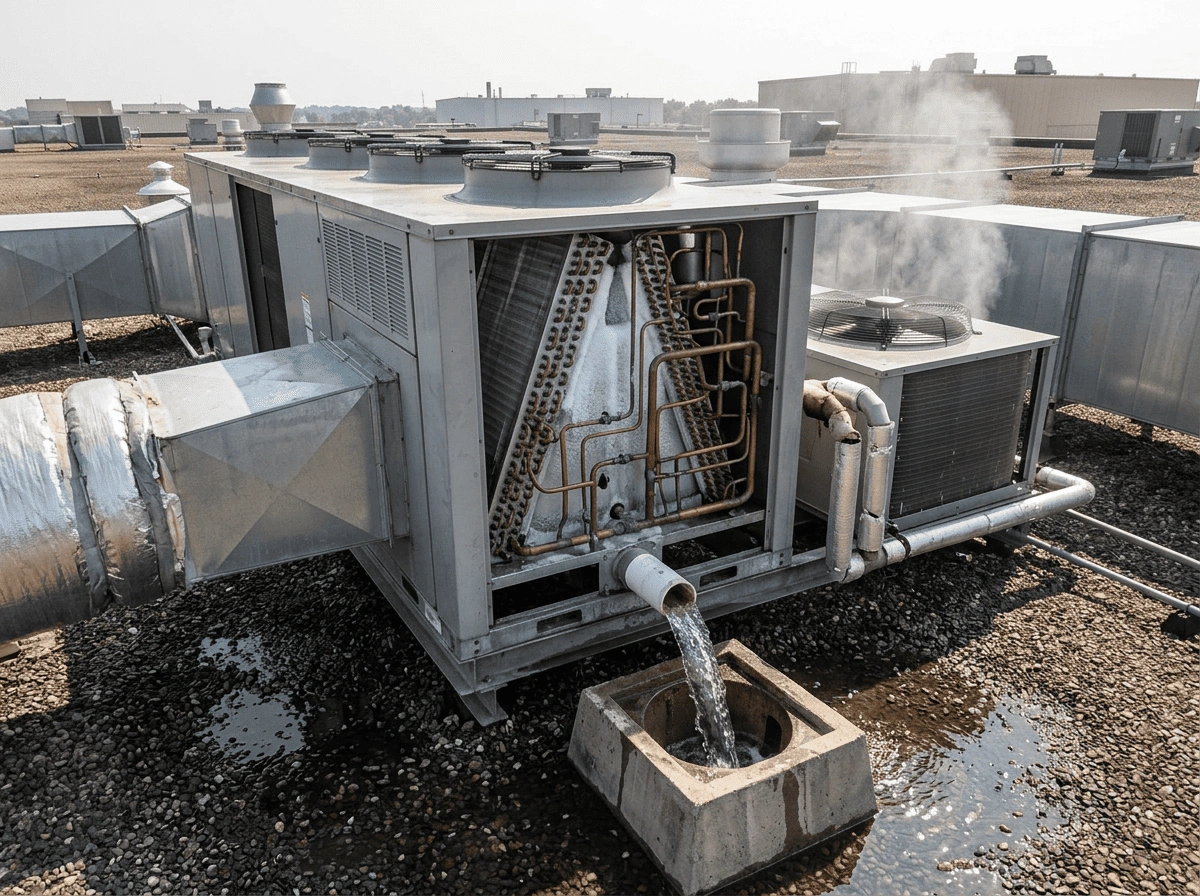
Air conditioning systems are designed to do more than lower temperatures. They also remove moisture from indoor air. When humidity levels rise, cooling equipment must work harder to achieve the same level of comfort. The reason is simple. People naturally cool themselves through the evaporation of perspiration. When humidity is high, moisture evaporates more slowly from the skin, making individuals feel warmer than the actual air temperature would suggest. As a result, a building maintained at a reasonable temperature may still feel uncomfortable if excess humidity remains in the air.
This often creates a cycle that increases operating costs. Employees lower the thermostats in an effort to feel cooler. Facility managers respond to comfort complaints by adjusting settings. The cooling system runs longer and consumes more energy, yet the root issue remains unresolved because humidity levels have not been properly addressed.
For businesses that rely heavily on customer experience, indoor comfort can have a noticeable impact on how visitors perceive the facility. A retail store that feels damp, a restaurant that feels stuffy, or an office environment that never seems comfortable can leave a lasting impression. Maintaining proper humidity levels helps create a more inviting atmosphere while supporting consistent comfort throughout the building.
Humidity can also create uneven conditions within a facility. Areas with limited airflow may feel significantly more humid than others, resulting in hot spots, comfort complaints, and reduced employee satisfaction. In larger commercial buildings, these issues can become increasingly difficult to manage without proper HVAC maintenance and system optimization.
One of the biggest challenges associated with humidity is the additional workload it places on commercial cooling systems. Every HVAC system has a finite capacity. When humidity levels are elevated, a larger portion of that capacity is devoted to moisture removal instead of temperature reduction.
This means the system must operate longer to maintain desired indoor conditions. Longer run times translate directly into higher energy usage, increased wear on critical components, and greater overall operating expenses.
For many commercial property owners, rising utility bills are often one of the earliest signs that humidity is affecting system performance. While higher energy consumption is commonly attributed to summer temperatures, excessive indoor moisture can contribute significantly to increased cooling costs.
Humidity-related strain also affects equipment longevity. Compressors, blower motors, coils, and other essential components experience greater stress when systems must continuously work to remove excess moisture from the air. Over time, this added demand can contribute to more frequent repairs and potentially shorten equipment lifespan.
Improperly sized equipment can make humidity problems even worse. An oversized system may cool a building quickly, but shut off before removing sufficient moisture from the air. Occupants may notice that the space feels cool yet uncomfortable. On the other hand, an undersized system may struggle to keep up with both cooling and dehumidification demands during periods of extreme heat and humidity.
Commercial buildings located along the Gulf Coast face these challenges regularly because outdoor humidity remains consistently high for much of the year. This makes proper HVAC design, maintenance, and system performance especially important for local businesses seeking to control energy costs while maintaining comfortable indoor environments.
Routine maintenance plays a significant role in preserving cooling efficiency. Dirty coils, clogged filters, restricted airflow, and drainage issues can all reduce a system’s ability to remove moisture effectively. Even relatively small maintenance concerns can lead to noticeable declines in humidity control and overall cooling performance.
The effects of humidity extend far beyond comfort and energy efficiency. Excess indoor moisture can influence the condition of the building itself, along with the assets, inventory, and equipment housed inside it.
When humidity levels remain elevated for extended periods, condensation can develop on windows, ductwork, walls, and other surfaces. Over time, persistent moisture can contribute to damage to building materials, flooring, insulation, and interior finishes. These issues often develop gradually, making them difficult to detect until repairs become necessary.
Indoor air quality is another important consideration. Moist environments can create favorable conditions for mold and mildew growth. While every commercial property presents unique circumstances, controlling humidity remains one of the most effective ways to support a healthier indoor environment. For businesses where employee wellness and customer experience are priorities, maintaining proper moisture levels can play an important role in overall facility management.
Certain industries face even greater risks from uncontrolled humidity. Restaurants generate moisture through cooking and cleaning activities. Healthcare facilities depend on stable indoor conditions to support patient comfort and daily operations. Offices rely on comfortable environments to promote productivity. Warehouses and storage facilities may house products, equipment, or materials that can be negatively affected by excessive moisture.
Modern commercial HVAC systems offer more advanced humidity-control capabilities than ever before. Variable-speed technology, smart controls, and enhanced monitoring systems allow facilities to maintain more consistent indoor conditions while improving efficiency. These solutions help cooling systems respond more effectively to changing environmental conditions, especially during periods of high outdoor humidity.
However, technology alone is not enough. Successful humidity management requires a comprehensive approach that includes proper system sizing, regular maintenance, professional inspections, and a clear understanding of how the building itself contributes to indoor conditions. Air leaks, inadequate insulation, and poor building envelope performance can all allow humid outdoor air to enter the facility, increasing the burden on cooling equipment.
Business owners who view humidity control as part of their overall facility strategy often see benefits that extend beyond HVAC performance. More consistent comfort, lower energy consumption, fewer maintenance concerns, and improved indoor air quality all contribute to a better experience for employees, customers, and visitors alike.
Along the Gulf Coast, humidity is a constant part of the environment. While it cannot be eliminated outdoors, it can be effectively managed indoors through proper HVAC design, maintenance, and professional support. Understanding how humidity impacts commercial cooling performance allows businesses to make informed decisions that protect their facilities, improve efficiency, and support long-term operational success.
If your commercial building struggles with inconsistent temperatures, rising energy costs, excessive indoor moisture, or ongoing comfort complaints, Gulf Coast HVAC can help. Our team understands the unique cooling and humidity challenges businesses face throughout the Gulf Coast region and provides customized solutions designed to improve performance, efficiency, and indoor comfort. Contact Gulf Coast HVAC today to schedule a professional evaluation and discover how effective humidity management can help your cooling system perform at its best year-round.
We are located here:

