

Air conditioning systems rarely fail because of a single dramatic event. In most cases, the decline happens gradually, driven by small inefficiencies that compound over time. For those who understand HVAC equipment beyond surface level, the connection between preventive maintenance and system longevity is well established. Air conditioners are precision machines that depend on controlled airflow, stable electrical input, accurate refrigerant balance, and efficient heat transfer. When those elements remain within design tolerances, the system ages predictably and delivers reliable service well beyond the minimum expectations set at installation. Preventive AC maintenance preserves those tolerances and keeps performance aligned with how the equipment was engineered to operate.
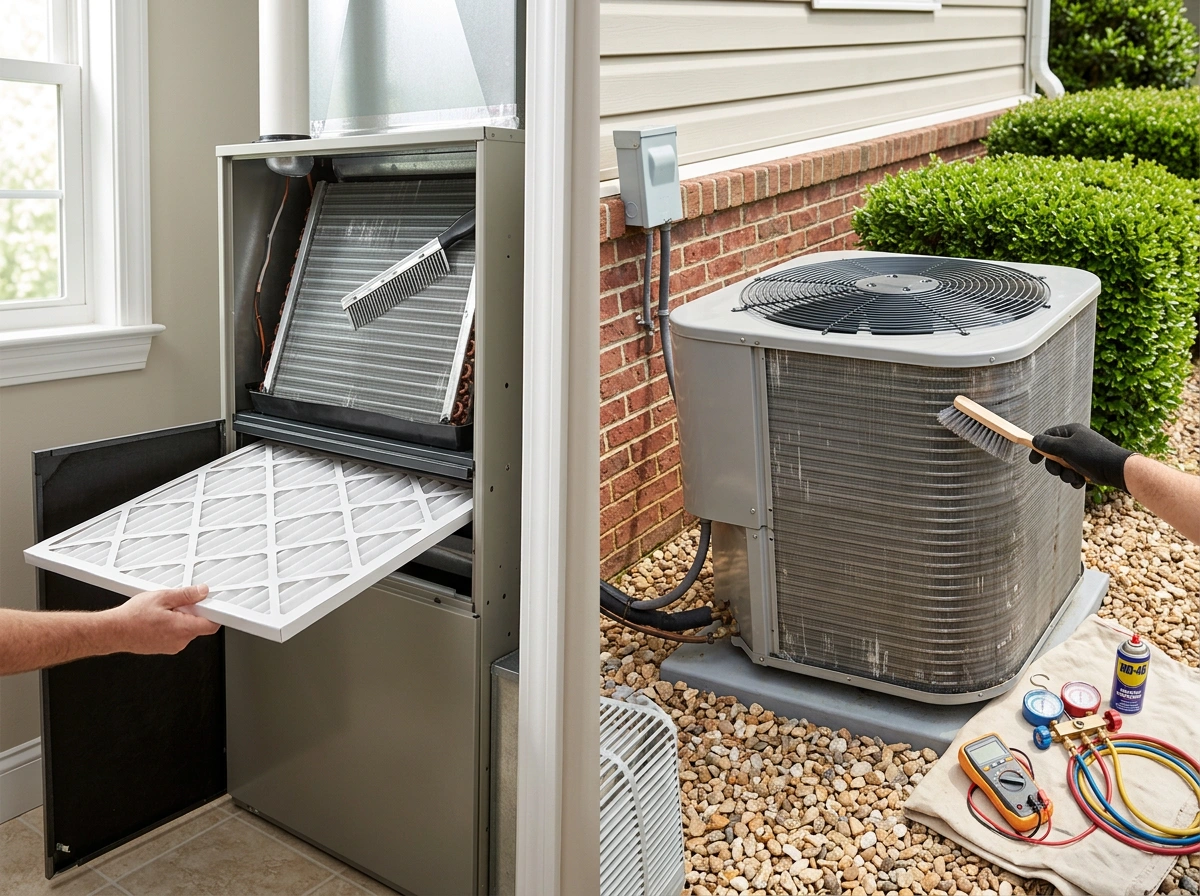
Mechanical and thermal stress account for a large share of premature AC failures. Every air conditioning system is designed to move a specific volume of air across coils sized for a defined heat load. When airflow is restricted, heat transfer efficiency declines. As heat transfer declines, operating temperatures rise throughout the system. Elevated temperatures accelerate wear on compressors, motors, and electrical components, even if cooling performance still appears acceptable.
Airflow restrictions are among the most common problems uncovered during routine service. A clogged filter, a dust-laden blower wheel, or debris inside the air handler can significantly reduce airflow across the evaporator coil. When less air moves across the coil, less heat is absorbed, causing coil temperatures to drop below normal operating levels. Ice formation often follows, further reducing airflow and creating unstable pressure conditions. Repeated freeze and thaw cycles place stress on copper tubing and force the compressor to operate outside its intended range. Preventive maintenance restores airflow before freezing occurs, protecting both the coil and the compressor.
Heat transfer efficiency plays an equally important role in long-term reliability. Condenser and evaporator coils rely on clean metal surfaces to exchange heat efficiently. When dirt, pollen, grease, or environmental contaminants accumulate, heat becomes trapped within the refrigerant. Pressures rise and internal temperatures increase. Over time, excessive heat degrades compressor insulation, weakens solder joints, and shortens the service life of capacitors and contactors. Routine coil cleaning reduces thermal stress and allows the system to regulate temperature without overworking its core components.
System balance also depends on mechanical stability. Loose mounting hardware, worn isolation pads, or misaligned fan assemblies introduce vibration into the system. That vibration transfers stress to refrigerant lines, electrical connections, and cabinet structures. Left uncorrected, it can lead to leaks, cracked tubing, or intermittent electrical faults. Preventive maintenance identifies abnormal movement early and corrects it before structural damage develops.
Electrical and refrigerant systems form the backbone of air conditioner operation, and both have a direct influence on equipment lifespan. Refrigerant charge accuracy is especially critical. Air conditioning systems are engineered around specific pressure relationships that support proper cooling and internal lubrication. Low refrigerant levels raise compressor discharge temperatures and reduce oil return, while overcharged systems operate under elevated pressures that strain valves, windings, and seals.
Preventive maintenance includes pressure and temperature checks that reveal early signs of refrigerant imbalance. Small leaks often go unnoticed by occupants, yet they steadily degrade performance while increasing compressor stress. Identifying and correcting these issues early prevents internal damage that commonly leads to compressor failure, one of the most costly outcomes in HVAC ownership.
Electrical health is equally important. Contactors, capacitors, and wiring connections experience constant heat and vibration throughout every cooling season. Loose connections increase electrical resistance, generating heat that damages terminals and insulation. Capacitors lose capacity gradually, forcing motors to draw higher current during startup and operation. These conditions accelerate motor wear and can result in sudden failure if left unaddressed.
During preventive maintenance, electrical components are tested under load, connections are tightened, and signs of overheating are addressed. This reduces the risk of unexpected breakdowns and prevents electrical stress from shortening the life of motors and compressors. Stable electrical performance allows mechanical components to operate within safe limits, which directly supports long-term reliability.
Environmental exposure further affects electrical and refrigerant systems, particularly in humid and coastal regions. Moisture and salt accelerate corrosion on terminals, coils, and cabinet components. Corrosion increases resistance and weakens protective coatings. Preventive maintenance slows this deterioration by cleaning affected areas and identifying corrosion before it compromises system performance or safety.
Efficiency and equipment life are closely connected. As an air conditioner loses efficiency, it compensates by running longer to meet cooling demand. Longer run times raise operating temperatures and increase electrical load. Both conditions accelerate wear across the system and shorten component lifespan.
Preventive maintenance preserves efficiency by addressing the causes of performance decline. Clean coils improve heat transfer. Proper airflow shortens run times. Correct refrigerant charge stabilizes pressures. Sound electrical connections reduce excess current draw. Together, these factors reduce system workload and help components age at a controlled pace.
Moisture management also plays a significant role in system longevity. Air conditioners remove humidity as part of the cooling process, and that moisture must drain freely from the equipment. A restricted condensate drain allows water to collect inside the air handler, where it can corrode metal components and damage electrical parts. Standing water also contributes to biological growth that restricts airflow and degrades system performance. Preventive maintenance keeps drains clear and protects the system from moisture-related damage that often goes unnoticed until significant deterioration occurs.
Controls and thermostats influence how often the system cycles and how long it runs. Inaccurate thermostats or misconfigured controls can cause short cycling or extended operation. Short cycling places heavy electrical stress on the compressor during repeated startups, while extended run times elevate internal temperatures. Maintenance checks confirm proper control operation and cycling patterns, reducing unnecessary strain on major components.
Service data consistently shows that systems receiving regular preventive maintenance last longer and experience fewer catastrophic failures. Most major breakdowns can be traced back to unresolved minor issues that progressed over time. Preventive maintenance interrupts that progression by creating routine checkpoints where developing problems are identified and corrected.
For those focused on long-term system reliability, preventive AC maintenance remains one of the most effective strategies available. Gulf Coast Heating & AC in Pinellas Park, FL, provides professional maintenance services designed to support efficiency, durability, and dependable performance. Contact us today to schedule service and help your air conditioning system continue operating reliably for years to come.
We are located here:

