

A strange odor drifting through your vents is one of the clearest signals your HVAC system can send. It cuts through the background noise of daily operation and demands attention in a way that temperature fluctuations or airflow changes often do not. In homes across Pinellas Park, where air conditioning systems run for most of the year, these smells tend to show up at inconvenient times, often when the system is working hardest. Two of the most common complaints are burning smells and musty odors, and each one points to very different conditions inside the system. Understanding what those smells mean helps homeowners respond quickly and avoid unnecessary damage.
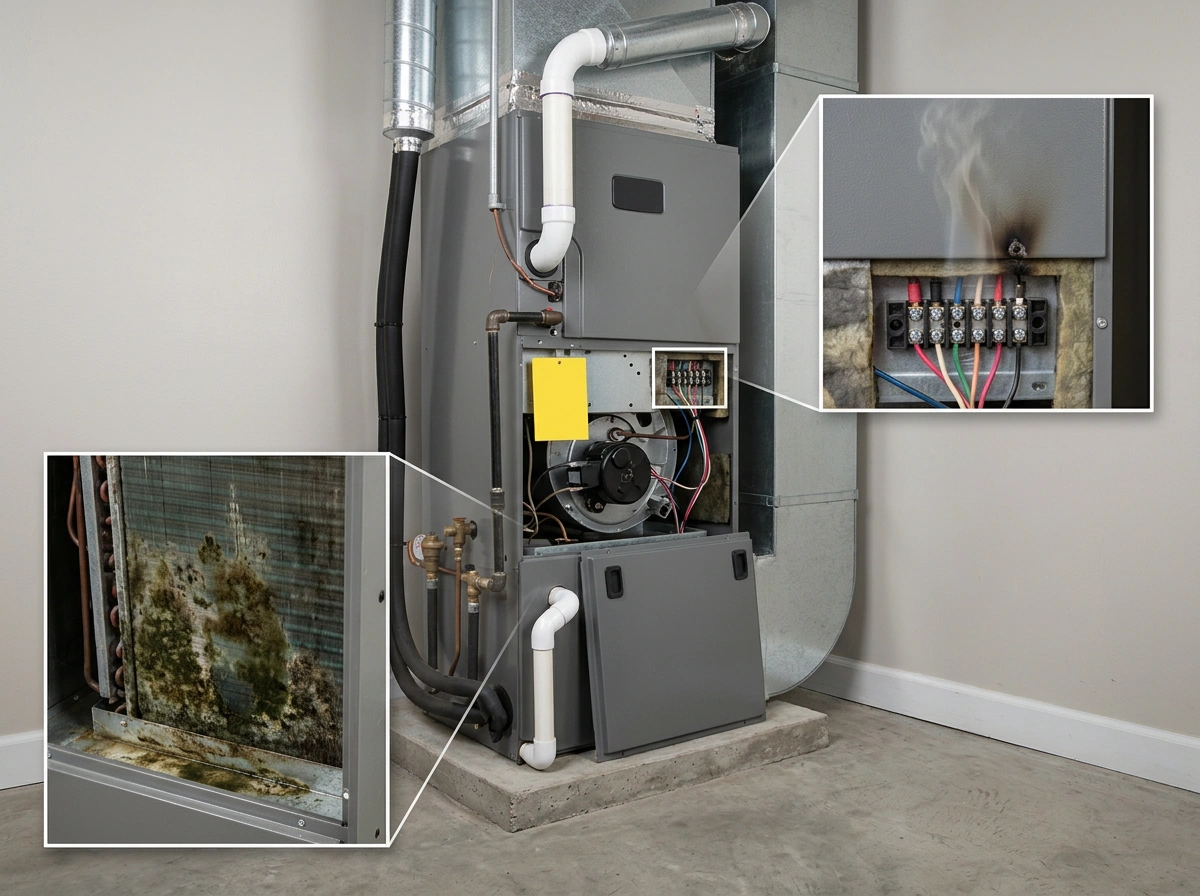
A burning smell often triggers concern, and in many cases that reaction is appropriate. When heat interacts with dust, electrical components, or mechanical parts, it can produce a sharp odor that spreads through the ductwork. One of the more harmless scenarios occurs when a system has been idle and is turned back on. Dust collects on internal components over time, and when those components heat up, the dust burns off. The smell can be noticeable but usually fades within a short period. If it disappears after one cycle, it is generally not a cause for concern.
A persistent burning smell points to a different situation. When the odor lingers or becomes stronger, it often indicates overheating within the system. Blower motors are a common source. As they age, internal bearings can wear down, forcing the motor to work harder and generate excess heat. That heat produces a smell that is difficult to ignore and should not be dismissed. Electrical issues are another possibility. Loose connections, damaged wiring, or failing capacitors can create heat buildup that leads to insulation burning. These problems carry real risk, as they can escalate into system failure or fire hazards if they are left unresolved.
Airflow restrictions can also contribute to burning odors. A clogged air filter limits the movement of air through the system, which causes components to run hotter than intended. Over time, that added strain can push parts beyond their normal operating range. While the smell may seem minor at first, it often signals that the system is under stress. Replacing filters regularly is a simple step that helps prevent this issue and keeps internal temperatures under control.
Musty smells come from a completely different set of conditions, and they are far more common in humid environments like Florida. These odors are tied to moisture, and where moisture lingers, microbial growth follows. Inside an HVAC system, several areas are prone to holding moisture, including the evaporator coil, drain pan, and condensate line. When these components are not draining or drying properly, they create an environment where mold and mildew can develop. The result is a damp, stale smell that spreads through the home each time the system runs.
Condensate drainage issues are one of the leading causes of musty odors. As the system cools the air, it removes humidity and directs that moisture into a drain line. When that line becomes clogged, water backs up and collects in the drain pan. Standing water quickly becomes a breeding ground for mold and bacteria, which then release odors into the airflow. This is why the smell often becomes more noticeable when the system starts up, as air pushes those odors into living spaces.
Dirty evaporator coils can make the problem worse. Dust and debris collect on the coil surface, trapping moisture and creating conditions where microbial growth can take hold. Over time, this buildup affects air quality and reduces system efficiency. The coil cannot transfer heat as effectively, which forces the system to run longer cycles. Extended operation keeps moisture present for longer periods and allows the odor to persist.
Ductwork can also contribute to musty smells, especially when it is exposed to humid air from outside the conditioned space. Small leaks or gaps allow moisture to enter, and if insulation is compromised, condensation can form inside the ducts. Once mold develops in this environment, it can spread throughout the system. Each time the HVAC system runs, it carries those odors into different areas of the home. Addressing this issue often requires sealing ducts and improving insulation to prevent further moisture intrusion.
Some odors do not clearly fall into burning or musty categories. A slightly sweet or chemical smell can indicate a refrigerant issue, while a sharp metallic scent may point to overheating components. These situations are less common but still important. Any unusual smell that does not resolve quickly should be evaluated, especially if it appears alongside changes in system performance.
Odor issues can escalate quickly if they are ignored. A faint musty smell can develop into widespread mold contamination when moisture is not addressed. A mild burning odor can lead to component failure if overheating continues. HVAC systems are designed to operate within specific conditions, and when those conditions change, the system often signals the problem through smell before other symptoms appear.
Routine maintenance plays a key role in preventing these problems. Cleaning coils, clearing drain lines, inspecting electrical components, and replacing filters help keep the system operating as intended. These steps improve efficiency and protect indoor air quality. In a climate where HVAC systems run frequently, consistent maintenance supports both performance and reliability.
Homeowners who pay attention to changes in smell often identify problems early. It does not require technical knowledge, only an awareness of what is normal for the system. If an odor appears suddenly, lasts longer than expected, or becomes stronger over time, it is a sign that something inside the system needs attention. Addressing the issue early can prevent more extensive repairs and reduce system downtime.
Burning and musty smells may seem minor at first, but they are linked to real mechanical and environmental conditions. One points to heat and potential electrical stress, while the other signals moisture and microbial growth. Both affect performance, comfort, and air quality in ways that become more noticeable over time. Recognizing these signs allows homeowners to take action and maintain a dependable HVAC system.
Addressing unusual HVAC odors early can prevent more serious issues and help maintain healthy indoor air quality throughout your home. Gulf Coast Heating & AC in Pinellas Park, FL, provides thorough system inspections and targeted solutions designed to resolve odor-related concerns at the source. Schedule a service visit today to ensure your system is operating safely, efficiently, and free from unwanted smells.
We are located here:

