

Living near the coast offers plenty of benefits, but the environment can be hard on HVAC equipment. Salt in the air, constant humidity, and frequent exposure to moisture all contribute to faster wear on heating and cooling systems. Coastal corrosion is one of the leading reasons outdoor HVAC units lose efficiency and break down earlier than expected in Gulf Coast communities. Salt particles settle on metal surfaces, trap moisture, and slowly damage important components such as condenser coils, electrical connections, fan motors, and cabinet panels. Without proper maintenance, corrosion can shorten the life of the system and lead to costly repairs that many homeowners could avoid with consistent care.
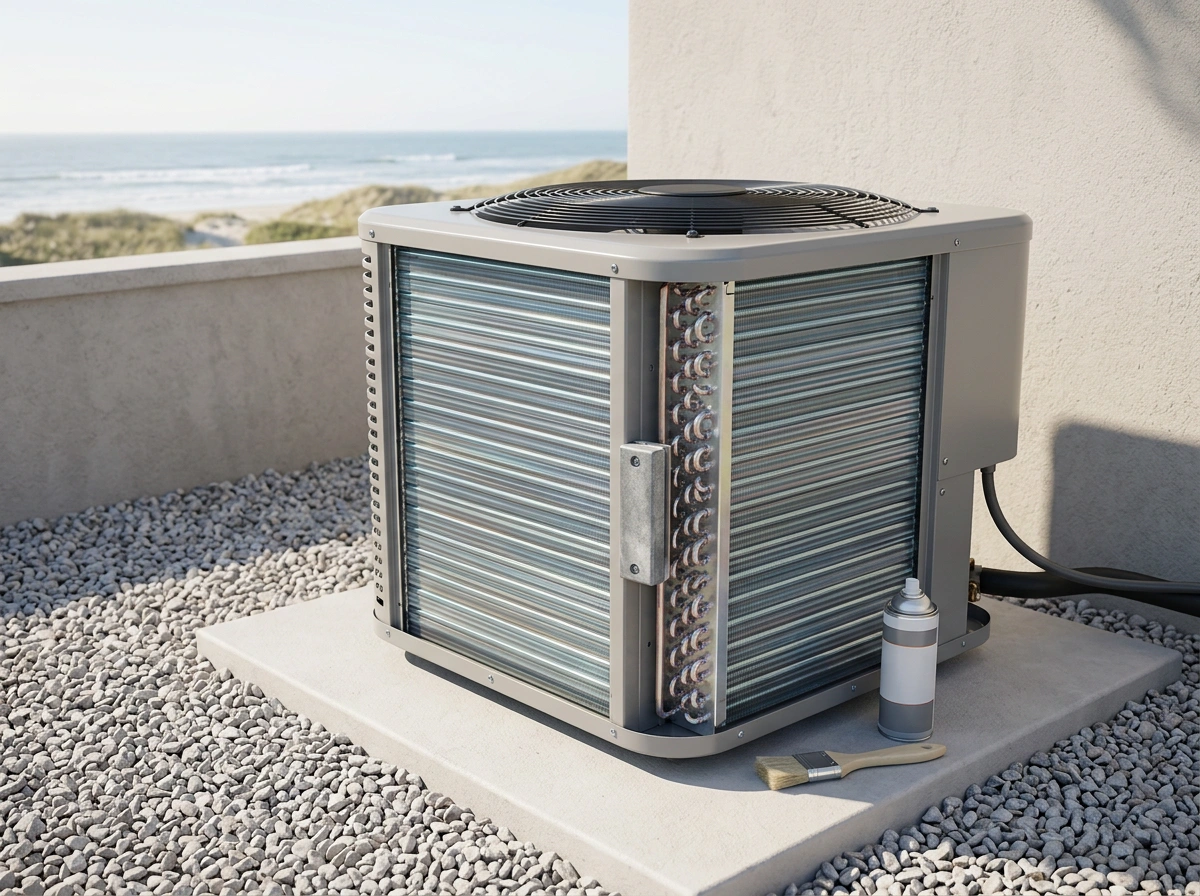
The outdoor condenser unit faces the most exposure to coastal conditions because it operates outside year-round. Even homes located several miles from the shoreline can experience corrosion from salt carried through humid coastal air. Over time, salt buildup weakens metal surfaces and affects the performance of critical parts inside the system. Condenser coils may begin to deteriorate, refrigerant leaks can develop, and electrical components may become unreliable. These problems often begin gradually, but once corrosion spreads, repair costs can increase quickly.
One of the simplest and most effective ways to protect an HVAC system from coastal corrosion is regular cleaning of the outdoor unit. Salt deposits should not remain on the condenser coils for long periods. Rinsing the condenser with fresh water helps remove buildup before it starts damaging the metal. Many HVAC professionals recommend gently washing the outdoor unit about once a month in coastal areas, especially during hot and humid seasons when systems run more frequently. A garden hose with moderate pressure is usually enough to clean the unit safely. High-pressure washing can bend coil fins and reduce airflow, which can lower system efficiency.
Routine professional maintenance is another important part of protecting HVAC equipment near the coast. During a maintenance visit, technicians inspect the system for early signs of rust, corrosion, and metal deterioration that homeowners may not notice right away. Identifying these issues early allows smaller repairs and preventative treatments to be completed before larger failures occur. Maintenance appointments also include coil cleaning, refrigerant checks, airflow testing, and inspections of electrical components. In coastal climates, regular maintenance helps reduce strain on the system and supports better long-term performance.
Protective coil coatings can help slow down corrosion caused by salty air. Many manufacturers now produce coastal-rated HVAC systems with factory-applied coatings designed to protect condenser and evaporator coils from environmental damage. These coatings create a barrier that limits direct contact between salt particles and metal surfaces. Existing systems can also benefit from aftermarket coatings applied by qualified HVAC technicians. Epoxy-based coatings are commonly used because they help protect the coils without interfering with heat transfer. Even with protective coatings, systems still need regular inspections because exposure to harsh outdoor conditions can gradually wear those coatings down over time.
The placement of the outdoor unit also affects how quickly corrosion develops. Condensers exposed directly to strong coastal winds often experience faster deterioration. Strategic landscaping can help reduce salt exposure while still allowing proper airflow around the equipment. Shrubs or barriers placed near the unit may help block some salty air, but they should never restrict ventilation. HVAC systems require steady airflow to release heat properly. When airflow becomes restricted by overgrown landscaping or debris, the system has to work harder to maintain indoor comfort. Most HVAC professionals recommend keeping at least two feet of open space around the condenser for airflow and service access.
Indoor humidity control also plays a role in protecting HVAC systems in coastal environments. Homes near the Gulf Coast often deal with high humidity levels for much of the year. Excess moisture inside the home forces the cooling system to run longer cycles and places additional stress on components such as evaporator coils and blower motors. Poor humidity control can also contribute to mold growth and indoor air quality issues. Properly sized HVAC systems typically remove moisture more effectively than oversized units, which may cool the house too quickly without completing enough dehumidification. In some homes, whole-home dehumidifiers can help improve indoor comfort while reducing strain on the HVAC system.
Air filter maintenance is another important factor. Dirty air filters restrict airflow and force the system to work harder during operation. In coastal climates where HVAC systems already deal with heavy environmental stress, reduced airflow can create even more wear on important components. Restricted airflow may also contribute to frozen evaporator coils and uneven cooling throughout the home. Homeowners should inspect filters regularly and replace them according to manufacturer recommendations. Homes with pets, heavy system usage, or higher levels of airborne particles may require more frequent filter changes.
Electrical components are especially vulnerable to corrosion in salty environments. Corrosion on terminals, wiring, and electrical connections can create resistance and overheating, eventually leading to system malfunctions or shutdowns. Capacitors and contactors often experience wear more quickly in coastal conditions because they operate constantly during cooling cycles. During maintenance appointments, HVAC technicians inspect electrical systems carefully for corrosion, loose connections, and moisture-related damage. Protective compounds may also be applied to certain connections to help reduce future corrosion.
Storm preparation is another important part of coastal HVAC maintenance. Hurricanes and tropical storms expose outdoor equipment to heavy rain, strong winds, flying debris, and saltwater exposure. Before severe weather arrives, homeowners should secure loose outdoor objects and inspect the area around the condenser for anything that could damage the equipment during a storm. Some properties may benefit from hurricane tie-down systems designed to secure outdoor HVAC units during high winds. After major storms pass, HVAC systems should be inspected for standing water, debris buildup, and visible damage before being operated again. Flood exposure can damage electrical and mechanical components, even if the system appears functional at first glance.
Drainage issues are also more common in humid coastal climates because air conditioning systems remove significant amounts of moisture from indoor air. Condensate drain lines and drain pans must remain clean and unobstructed to prevent water backups and moisture-related damage. Clogged drain lines can lead to mold growth, water leaks, and automatic system shutdowns triggered by safety switches. Routine cleaning and inspection of the drainage system help prevent these issues and support healthier indoor air quality.
Consistent maintenance remains the best defense against coastal corrosion. Salt exposure cannot be completely avoided in Gulf Coast environments, but regular cleaning, professional inspections, proper airflow management, humidity control, and preventative service can help slow the corrosion process significantly. HVAC systems that receive ongoing maintenance often last longer, operate more efficiently, and experience fewer breakdowns than systems that receive only occasional attention. Coastal climates place extra demands on heating and cooling equipment, and proactive maintenance helps ensure the system stays reliable through every season.
If your HVAC system operates in a coastal environment, professional maintenance can help reduce corrosion and prevent avoidable repairs. Gulf Coast Heating & AC provides thorough inspections, coil cleaning, and preventative service designed for Gulf Coast conditions. Schedule a service appointment today to keep your heating and cooling system operating efficiently year-round.
We are located here:

