

An air conditioner that no longer cools the way it once did is rarely trying to make a dramatic statement. More often, it is offering a quiet warning. Homeowners along the Gulf Coast tend to notice it first on the hottest afternoons, when the system seems to run longer than it should or when rooms that once cooled quickly now feel stubbornly warm. The unit still turns on. Air still flows from the vents. Yet the comfort that used to define summer living feels harder to achieve. For those who understand HVAC systems beyond a surface level, this gradual decline almost always points to maintenance issues that have been building over time rather than sudden mechanical failure.
Air conditioning systems are designed to operate within narrow performance margins. When everything is clean, calibrated, and balanced, cooling is consistent and predictable. When maintenance falls behind, performance slips in small increments. Each overlooked detail takes a modest toll on capacity until the system reaches a point where comfort can no longer be maintained during peak demand. The challenge is that no single issue announces itself loudly. Instead, several modest problems often overlap, making the system appear tired rather than broken.
Airflow is the backbone of any properly functioning air conditioning system. Without sufficient air moving across the evaporator coil, heat removal slows down regardless of how advanced the equipment may be. One of the most common maintenance oversights is a neglected air filter. A filter loaded with dust and debris restricts airflow, forcing the blower motor to work harder while delivering less air to the home. The result is a system that consumes more energy while producing less cooling, a combination that quickly erodes performance.
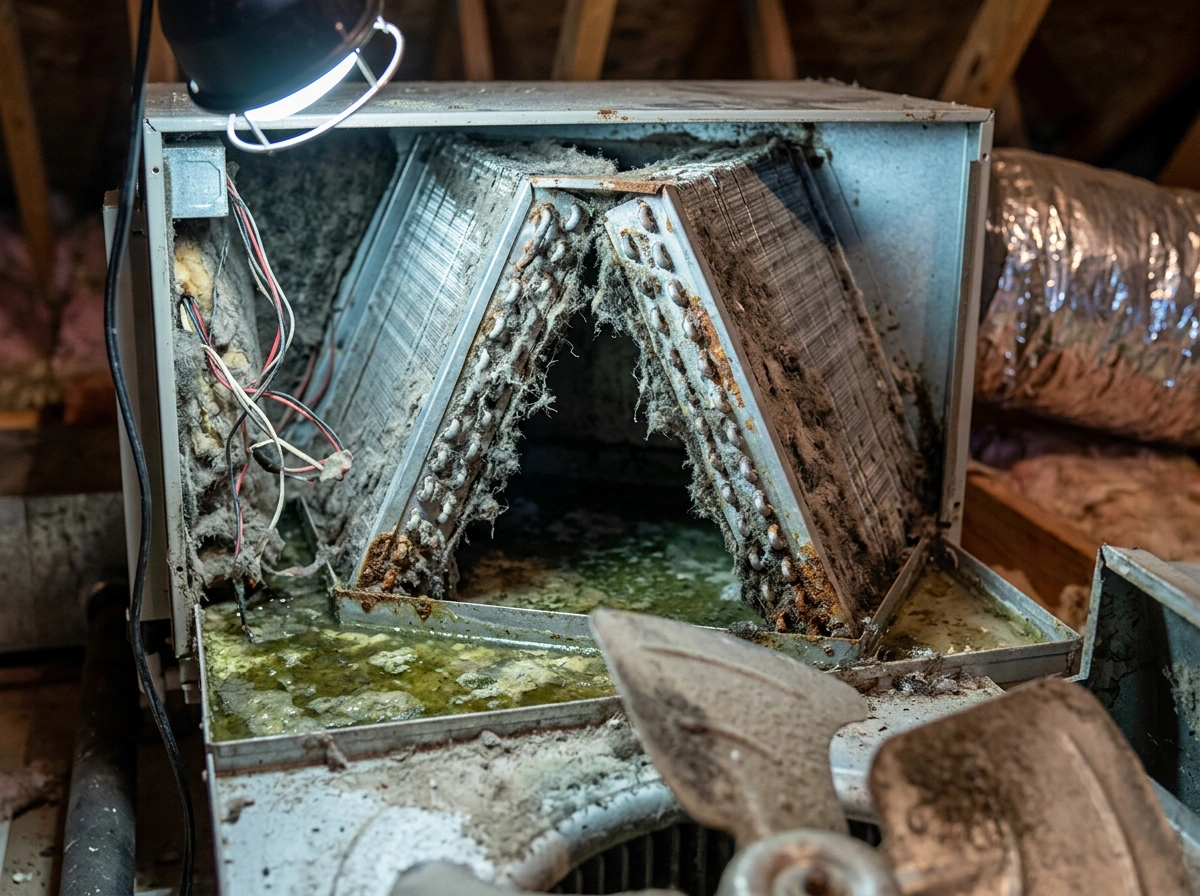
As airflow becomes restricted, the evaporator coil often suffers next. Even with regular filter changes, fine particles circulate through the system and gradually settle on the coil surface. Over time, this layer of buildup interferes with heat transfer. The refrigerant inside the coil cannot absorb heat as efficiently, which reduces cooling output and lengthens run cycles. In the Gulf Coast’s humid climate, this problem becomes more pronounced. Reduced heat absorption can lower coil temperatures enough to cause condensation to freeze, forming ice that further restricts airflow. At that point, cooling performance drops sharply, even though the system continues to operate.
Outdoor coil condition is just as critical and often more exposed to environmental stress. The condenser coil must release heat efficiently for the system to maintain proper operating pressures. Coastal air carries salt, pollen, and fine debris that collect quickly on condenser fins. Lawn maintenance adds another layer of contamination in the form of grass clippings and dust. When the condenser coil becomes coated, heat rejection slows down. System pressures rise, cooling capacity falls, and the compressor is forced to operate under heavier strain. Left unaddressed, this stress accelerates wear on components that are already working hard during long cooling seasons.
Refrigerant balance is another factor that directly affects cooling performance and often goes unnoticed until comfort declines. Air conditioners are charged with a specific amount of refrigerant that allows heat to move efficiently through the system. Refrigerant does not degrade or get consumed, so when levels are low, a leak is usually present. These leaks tend to develop slowly at connection points, valves, or coils, often due to vibration, corrosion, or age. Because the loss is gradual, the system may continue to run while delivering less cooling over time.
An undercharged system cannot absorb or release heat at the proper rate. Indoor temperatures creep upward, and run times increase as the equipment struggles to keep pace. Energy consumption rises, yet comfort does not improve. Improper servicing can create similar symptoms in a different way. Overcharging a system increases operating pressure and disrupts heat transfer. Both conditions reduce cooling capacity and place unnecessary stress on the compressor. In either case, the root cause is maintenance related and requires careful measurement and correction rather than guesswork.
Electrical components also play a quiet but important role in cooling performance. Capacitors, contactors, and relays manage the electrical demands of motors and compressors that cycle repeatedly during the cooling season. Over time, these components degrade. A weakening capacitor may still allow a motor to start, but not with the same strength or efficiency. Fan motors may run at reduced speed, limiting airflow across the coils. Compressors may hesitate before starting or fail to reach optimal operating conditions. These electrical inefficiencies often escape notice because the system still runs, yet cooling performance continues to decline.
Thermostat accuracy deserves attention as well. A thermostat that is miscalibrated or poorly located can misjudge indoor temperature and control system operation incorrectly. If the thermostat cycles the system off too early, the home may never reach a comfortable temperature. If it cycles inconsistently, occupants experience uneven cooling that feels unpredictable. Wiring issues, aging sensors, or outdated control technology can all contribute to these problems. In many cases, resolving thermostat issues restores consistent cooling without touching the mechanical equipment itself.
Ductwork condition has a direct influence on how much cooling actually reaches living spaces. Even a well-maintained air conditioner cannot compensate for significant duct losses. Leaks, gaps, and inadequate insulation allow conditioned air to escape before it reaches occupied rooms. In hot, humid climates, these losses are especially damaging. Warm air drawn into the duct system increases the cooling load, while escaping conditioned air reduces overall capacity. The system runs longer, works harder, and still falls short of expectations.
Humidity control is another often overlooked factor in cooling complaints. Air conditioners remove moisture as part of normal operation, and that moisture must be drained away efficiently. When condensate lines are partially clogged or drainage is compromised, indoor humidity levels rise. High humidity makes air feel warmer and heavier, even when temperatures are technically within range. Homeowners frequently respond by lowering the thermostat, which increases run times without resolving the real issue. Proper moisture management supports both comfort and system efficiency, especially in regions where humidity is a constant challenge.
System age adds a final layer of complexity. As equipment ages, efficiency declines gradually. Motors lose strength, bearings develop resistance, and coils experience corrosion that affects heat transfer. None of these changes happen overnight, but together they reduce cooling capacity year after year. Aging systems can still perform well, but only when supported by consistent maintenance. Cleaning, adjustments, and early identification of developing issues help preserve performance and delay the need for replacement.
If your AC system is struggling to meet the demands of Gulf Coast heat, a professional evaluation can identify the specific maintenance issues affecting its performance. The technicians at Gulf Coast Heating & AC in Pinellas Park, FL, focus on thorough inspections and precise service that address root causes rather than temporary symptoms. Schedule a service visit today and restore your system’s ability to deliver dependable cooling when it matters most.
We are located here:

