

Air conditioning systems in Pinellas Park operate under long cooling seasons, high humidity, and continuous demand. That environment exposes even minor issues quickly. Experienced HVAC professionals understand that most system failures are preceded by clear warning signs. Paying attention to those signals allows homeowners to address problems early, when repairs are still manageable. Ignoring them often leads to emergency service calls, higher costs, and extended downtime during peak heat. Recognizing these seven signs gives you a practical way to protect system performance and avoid unexpected failure.
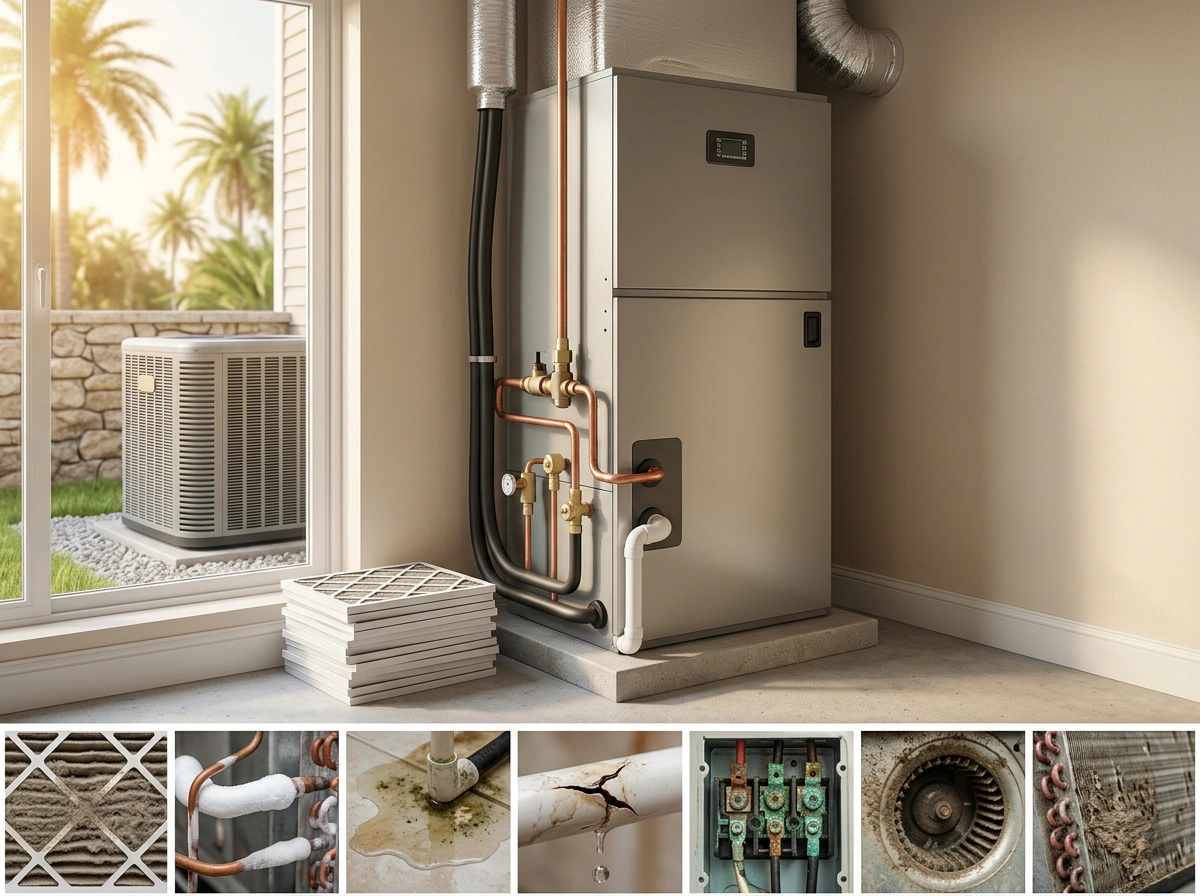
A noticeable drop in cooling performance is often the first sign of trouble. When an AC system struggles to reach or maintain the set temperature, it usually reflects reduced efficiency within the cooling cycle. Low refrigerant levels, restricted airflow, or a weakening compressor are common causes. In a Pinellas Park home, this often appears as longer run times with less comfort. The thermostat remains unchanged, yet the indoor space feels warmer or uneven. This gap between expected and actual performance signals the need for professional service.
Weak airflow is another clear indicator. Air conditioning systems rely on steady air movement to distribute cooled air throughout the home. When airflow decreases, certain rooms may remain warm while others cool unevenly. This condition often results from clogged filters, duct restrictions, or blower motor issues. In some cases, buildup on the evaporator coil limits air movement and reduces system output. If not addressed, airflow problems increase strain on the system and can lead to more serious mechanical failures.
Unusual sounds provide direct insight into the system’s mechanical condition. A properly functioning unit produces a consistent, low-level sound during operation. Any sudden change should be taken seriously. Grinding noises may indicate motor bearing wear. Rattling can point to loose components or debris within the unit. Squealing often relates to motor or belt issues. These sounds rarely resolve on their own and typically worsen over time. Early attention can prevent more extensive damage and costly repairs.
Short cycling is another important warning sign. This occurs when the system turns on and off in rapid intervals instead of completing a full cooling cycle. It may result from thermostat calibration problems, electrical issues, or improper system sizing. Short cycling places repeated stress on the compressor, which accelerates wear and reduces overall lifespan. It also increases energy consumption, as startup requires more power than steady operation.
Odors coming from the system should never be ignored. A musty smell often indicates microbial growth within the ductwork or evaporator coil. A burning smell may suggest electrical problems or overheating components. These conditions affect both system performance and indoor air quality. Identifying the source early helps prevent further damage and supports a healthier indoor environment.
Humidity imbalance inside the home is a less obvious but equally important sign. In a coastal area like Pinellas Park, air conditioning systems play a major role in moisture control. When indoor air feels damp or sticky while the system is running, moisture removal is no longer effective. This may be linked to refrigerant issues, coil performance concerns, or improper system sizing. Elevated humidity can lead to discomfort, indoor air quality problems, and potential mold growth over time.
An unexplained increase in energy costs is often one of the earliest measurable indicators of declining performance. When an AC system loses efficiency, it runs longer and works harder to meet cooling demands. This change may not immediately affect comfort, but it becomes evident in monthly utility bills. A steady increase in energy use without a change in household habits suggests that the system requires attention.
Moisture or leaks around the indoor unit also indicate a problem. Air conditioning systems naturally produce condensation, but this moisture should be properly drained. When water begins to collect around the unit, it often points to a clogged condensate line or a failing component. In some cases, refrigerant leaks may appear similar to water leaks, which increases the urgency of inspection. Addressing leaks early helps prevent structural damage and maintains system efficiency.
System age also contributes to how these signs develop. Units that have been in operation for more than a decade often show a gradual performance decline. Components wear down, efficiency decreases, and the system becomes more sensitive to environmental stress. Older systems are also more prone to refrigerant issues and may not meet current efficiency standards. While age alone does not determine failure, it increases the importance of responding quickly to any performance changes.
In Pinellas Park, where cooling demand remains high for much of the year, waiting for a complete breakdown creates unnecessary risk. Each of these seven signs presents an opportunity to correct a problem before it escalates. Timely service helps restore performance, improve efficiency, and extend the lifespan of the system. For homeowners and HVAC enthusiasts, these indicators provide a clear and practical framework for making informed maintenance decisions.
If you are noticing reduced cooling, weak airflow, unusual sounds, or rising energy bills, it is time to have your system inspected before it fails completely. Addressing these issues early helps prevent costly repairs and keeps your home comfortable through the hottest months. Gulf Coast Heating & AC can evaluate your system, identify the cause, and restore reliable performance. Schedule your AC repair in Pinellas Park today and take control before your system quits.
We are located here:

