

Air ducts rarely receive the same attention as thermostats, condensers, or high-efficiency equipment, yet they have a direct effect on comfort, airflow, and operating cost. Every cubic foot of heated or cooled air moves through that network before reaching the living space. When ducts leak, sag, separate, or restrict airflow, the entire HVAC system feels the strain. Rooms fall out of balance, run times increase, and equipment works harder than necessary. Many homeowners eventually face an important decision: repair the existing duct system or invest in new duct installation. The best path depends on the condition of the materials, the quality of the original design, and the long-term goals for the home.
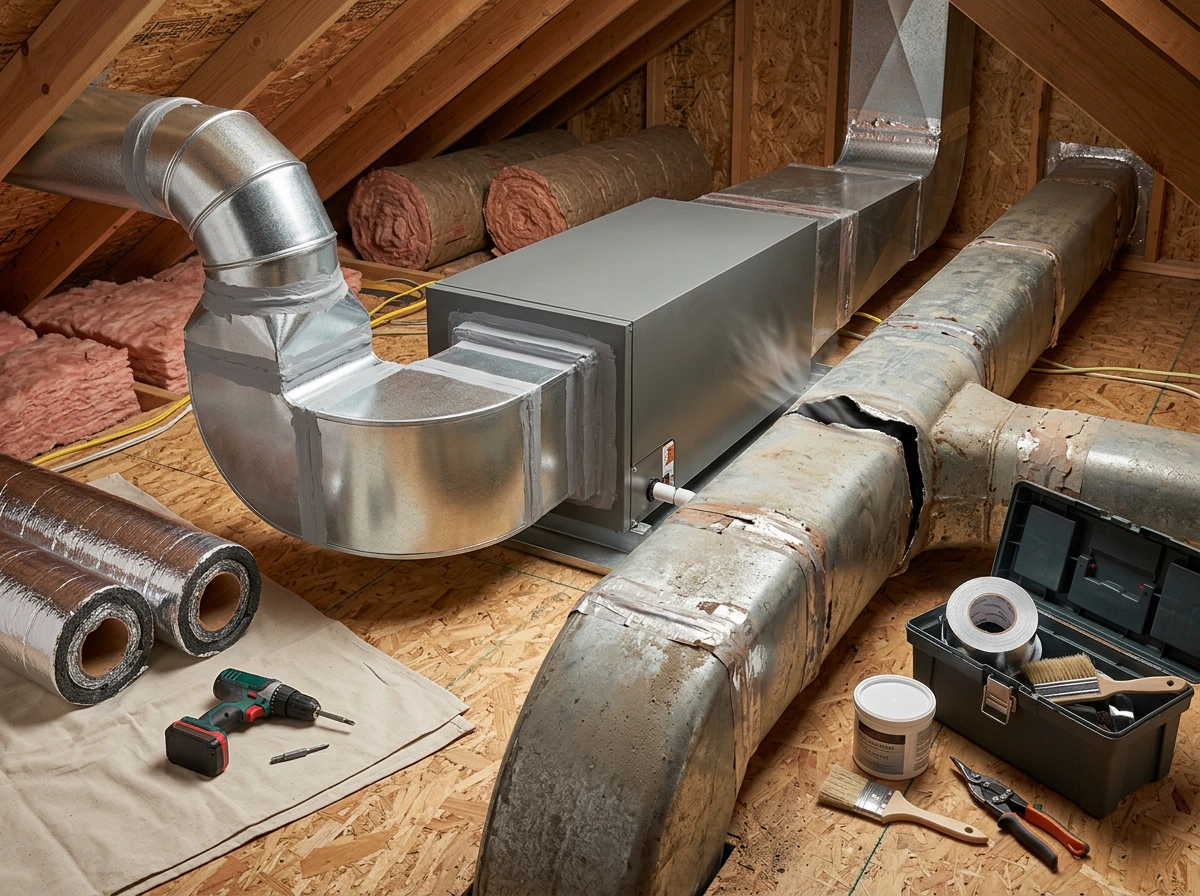
In many homes, duct repair is the most practical first step. Not every issue requires a complete replacement. A disconnected branch line in the attic, loose joints, torn insulation, minor air leaks, or a crushed section of flexible duct can often be corrected without rebuilding the entire system. These problems may appear minor, but they can create noticeable comfort issues. A bedroom that never cools properly or a living room with weak airflow may be linked to a damaged run or a leaking connection. Once technicians isolate and correct those defects, homeowners often notice immediate improvement.
Repair also offers strong value when the main duct layout remains sound. If supply and return paths are properly sized and located, targeted repairs can restore performance at a lower upfront cost. Sealing joints with approved materials, replacing damaged insulation, adjusting dampers, and correcting airflow restrictions can reduce waste and help conditioned air reach the intended rooms. For homeowners dealing with one or two known trouble spots, repair can solve the issue without the expense of a full replacement project.
Some duct systems, however, reach a stage where repairs become repetitive and inefficient. Older ductwork may show widespread wear, brittle flexible sections, rusted metal, failing supports, or deteriorated internal liners. In these cases, fixing one area often reveals another weak point later. This cycle can become frustrating for homeowners who continue paying for service calls while comfort issues remain unresolved. When multiple sections are failing at the same time, replacement is often the more practical investment.
Design problems are another reason new duct installation may be the better choice. Some homes were built or remodeled with duct systems that were never properly engineered for the space. Undersized trunks, long restrictive runs, poorly located returns, and unbalanced branch lines can create persistent hot and cold spots. The HVAC equipment may be operating correctly, but the air distribution system prevents it from delivering consistent results. In that situation, repairing leaks alone will not solve the core problem. A redesigned duct system can correct airflow at its source.
New duct installation gives technicians the opportunity to match the air distribution system to the home as it exists today. Room usage changes over time. Additions are built, walls are moved, insulation levels improve, and equipment is upgraded. A modern duct design can account for those changes and deliver airflow where it is needed most. Proper sizing and balanced return air help stabilize temperatures, reduce strain on equipment, and improve humidity control. That is especially important in climates where cooling systems work hard for much of the year.
Efficiency is another major factor in this decision. HVAC equipment depends on proper airflow to perform as intended. When ducts leak conditioned air into attics or crawl spaces, the system must run longer to satisfy the thermostat. When ducts are too restrictive, airflow drops, and components can experience unnecessary stress. Many homeowners focus on replacing equipment to lower energy bills, but duct performance can be just as important. A well-sealed and properly sized duct system supports better efficiency across the entire HVAC setup.
Indoor air quality also deserves attention. Gaps in return ducts can draw in dust, insulation particles, or humid air from unconditioned spaces. Damaged duct insulation can create additional problems in hot attics where temperature extremes are common. If sections of ductwork have been exposed to moisture or contamination, replacement may be the cleaner and more reliable solution. In other cases, sealing leaks and correcting damaged sections may be enough to improve air delivery and system cleanliness.
The age of the duct system often helps guide the decision. Newer ducts with isolated damage are usually strong candidates for repair. Older systems showing multiple symptoms at once, such as weak airflow, visible deterioration, recurring leaks, and rising utility costs, may be better served by replacement. Material type also matters. Sheet metal ducts can often be rehabilitated if they remain structurally sound. Aging flexible ducts exposed to years of attic heat may be less forgiving.
A professional evaluation is the best place to start. Technicians can inspect accessible ductwork, measure airflow, test static pressure, and identify leakage or design limitations. Those findings help separate problems that can be solved with focused repairs from issues rooted in an outdated or poorly performing system. Good recommendations come from measurements, field experience, and a clear understanding of how the home actually performs.
Repair is often the right move when the duct system is fundamentally sound, and the issues are limited to specific areas. New installation is often the stronger long-term solution when the ductwork is aging, damaged across multiple sections, or poorly designed for the home. The best choice is the one that improves comfort, protects efficiency, and reduces future headaches instead of delaying them. If your home has uneven temperatures, weak airflow, or signs of aging ductwork, Gulf Coast Heating & AC can evaluate the system and recommend the right solution for lasting comfort. Schedule a service today and get expert guidance built around your home’s actual needs.
We are located here:

