

In humid climates, indoor air quality depends on how effectively a home manages moisture and airflow. Humidity affects the movement of air, the behavior of airborne particles, and the performance of mechanical systems that circulate conditioned air. Through consistent HVAC maintenance, heating and cooling systems continue operating with balanced airflow, controlled humidity levels, and properly functioning components. Routine service keeps filters, coils, and drainage systems clear so the system can support steady air circulation and cleaner indoor air throughout the home.
Humidity changes the dynamics of indoor air. Fine particles absorb moisture, allergens remain active longer, and biological contaminants encounter conditions that support growth. HVAC systems are designed to manage these effects by removing heat and moisture while continuously filtering the air. When maintenance slips, the system loses control over these processes. Homes may feel cool yet damp, with air that seems heavy or stale despite normal thermostat readings.
The evaporator coil sits at the center of this issue. As warm, humid air moves across the coil, moisture condenses and drains away. This is the primary method by which air conditioning systems reduce indoor humidity. Over time, dust and organic debris collect on the coil surface. In humid environments, that buildup traps moisture, reduces heat transfer, and limits condensation. Cooling capacity may appear intact, but moisture removal drops sharply. Regular coil cleaning restores proper thermal exchange and allows the system to reduce humidity effectively, which is essential for maintaining acceptable indoor air quality.
Airflow is equally important. Every HVAC system is designed around a specific volume of air moving across the coil. When airflow falls below that target, dehumidification suffers. Dirty filters, blocked returns, or neglected blower components restrict air movement and shorten run cycles. In humid homes, short cycling is a common contributor to air quality complaints. The space cools quickly, but moisture remains suspended in the air. Routine filter replacement and airflow inspection keep the system operating within its intended range, allowing sufficient run time to remove moisture while filtering particulates from the air stream.
Filtration performance depends on both filter condition and airflow balance. Moist air causes dust and allergens to clump together, which makes filtration more effective when systems are maintained properly. When filters are overloaded, poorly fitted, or changed infrequently, contaminants bypass the filtration stage and accumulate inside the system. Maintenance ensures filters are properly selected, correctly installed, and replaced based on environmental conditions rather than a generic schedule. This reduces airborne particle levels and limits internal buildup that can degrade air quality over time.
In humid climates, duct integrity has a direct impact on indoor air quality. Leaky return ducts can pull warm, moisture laden air from attics, crawl spaces, or wall cavities into the system. That air often carries mold spores, insulation fibers, and other contaminants that are introduced directly into the supply air. Supply-side leaks reduce system efficiency and disrupt pressure balance, forcing the equipment to cycle more frequently while delivering less effective dehumidification.
Professional maintenance includes inspection of duct connections, airflow balance, and pressure conditions. Sealing leaks and correcting imbalances prevent unconditioned air from entering the system and reduce the moisture load the equipment must handle. These corrections improve both system efficiency and the cleanliness of the air distributed throughout the home.
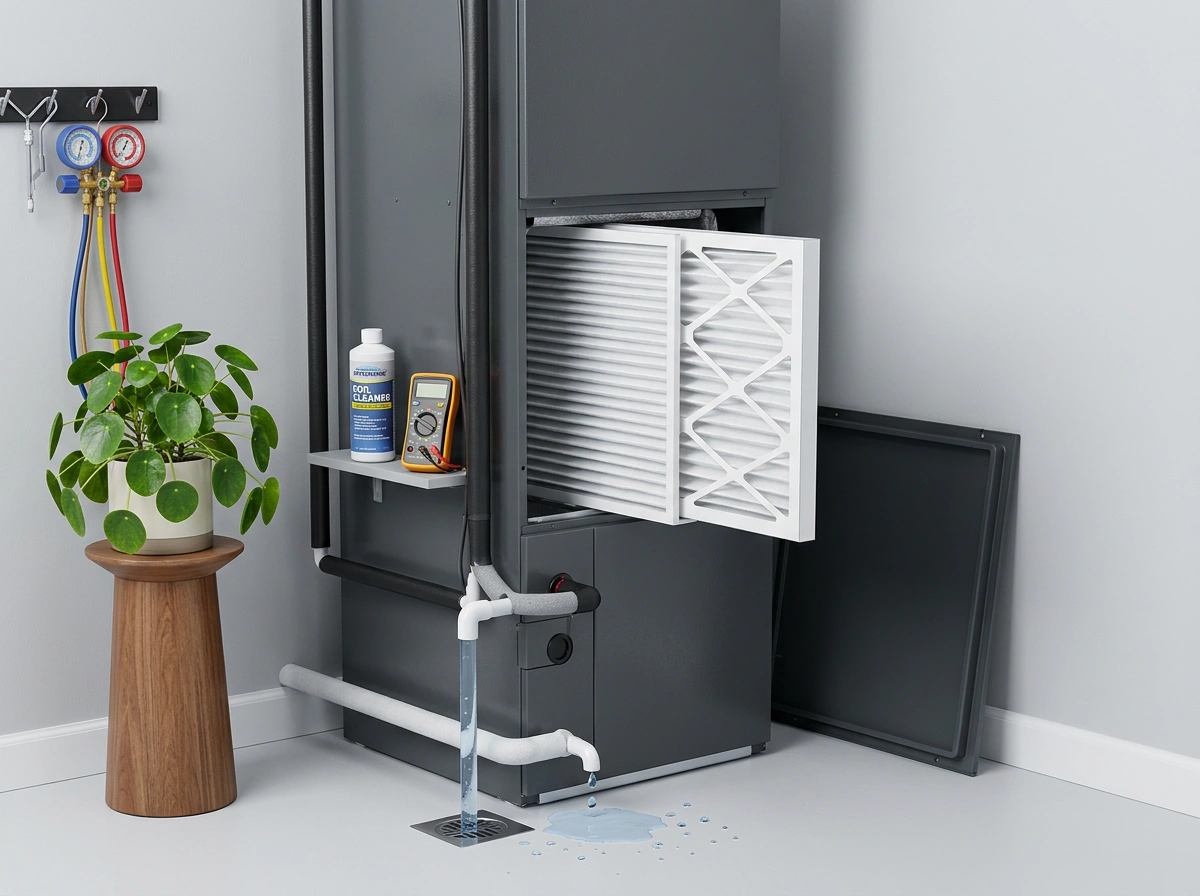
Condensate management is another maintenance area with direct air quality consequences. As the system removes moisture, that water must drain away without interruption. In humid environments, condensate lines are under constant load and are prone to clogging from algae, debris, or microbial growth. A restricted drain can cause water to back up into the air handler or overflow into surrounding materials. Standing water inside the system creates ideal conditions for mold and bacterial growth, which can then be carried into the duct system.
Routine inspection and cleaning of condensate drains prevent water accumulation and eliminate a common source of internal contamination. Proper drainage keeps moisture moving out of the system rather than allowing it to collect where it can compromise air quality.
Internal cleanliness of the HVAC unit also plays a role. Blower assemblies, motor housings, and interior panels naturally collect dust during operation. In humid conditions, that dust absorbs moisture and can support biological growth. Each operating cycle can then distribute contaminants throughout the home. Maintenance that includes inspection and cleaning of internal components reduces this risk and keeps the air stream cleaner from intake to supply.
System calibration also influences humidity control. Refrigerant charge, electrical performance, and thermostat accuracy determine how consistently a system operates. Equipment that cycles erratically may satisfy temperature demand while failing to remove adequate moisture. Maintenance checks address these issues early, restoring steady operation that supports both dehumidification and filtration.
Improved indoor air quality in humid homes is rarely achieved through isolated repairs or single upgrades. It results from consistent system care that keeps every component operating as intended. HVAC maintenance supports the effectiveness of indoor air quality accessories such as high-efficiency filters, ultraviolet treatment systems, and whole-home dehumidifiers. These technologies rely on clean components and balanced airflow. Without maintenance, their performance declines regardless of design or cost.
From a building science perspective, HVAC maintenance supports the broader moisture management strategy of the home. Insulation, air sealing, and ventilation all contribute to humidity control, but the HVAC system remains the primary active mechanism for removing moisture from indoor air. When maintained correctly, it works in coordination with the building envelope to keep humidity levels stable during extended periods of high outdoor moisture. When neglected, it becomes a point of failure that allows humidity and contaminants to accumulate indoors.
Health considerations further reinforce the value of maintenance in humid environments. Elevated humidity supports the growth of mold and dust mites, both of which are associated with respiratory irritation and allergic responses. Poor air quality can contribute to discomfort and ongoing indoor air complaints. While maintenance cannot eliminate every pollutant, it significantly reduces the conditions that allow contaminants to thrive. Clean coils, unrestricted drainage, proper airflow, and reliable filtration work together to create a healthier indoor environment.
For HVAC professionals and serious enthusiasts, the benefits of maintenance are measurable. Lower indoor humidity, cleaner airflow, and consistent system operation are the direct results of equipment that is inspected, cleaned, and adjusted on a regular basis. In humid climates, air quality problems often surface long before major mechanical failures occur. Addressing maintenance needs early protects both system performance and indoor environmental conditions.
HVAC maintenance plays an important role in managing humidity and supporting indoor air quality in Florida homes. Regular service helps keep your system clean, efficient, and ready to handle changing weather conditions. Gulf Coast Heating & AC in Pinellas Park, FL provides professional maintenance designed to support reliable comfort throughout the year. Our team focuses on practical solutions that help systems perform consistently over time. Contact us to schedule HVAC maintenance and keep your home comfortable and well-maintained.
We are located here:

