

Along the Gulf Coast, HVAC systems are asked to perform under conditions that leave little room for error. Long stretches of heat, near-constant humidity, salt exposure, and sudden weather shifts create a working environment that is far harsher than many homeowners realize. In this region, heating and cooling equipment does not get the seasonal breaks seen in cooler climates. That reality makes one question especially important for homeowners and buyers alike: how much does HVAC maintenance cost in the Gulf Coast area, and why does it cost what it does? The answer is rooted in climate, system design, and the level of professional care required to keep equipment running reliably year after year.
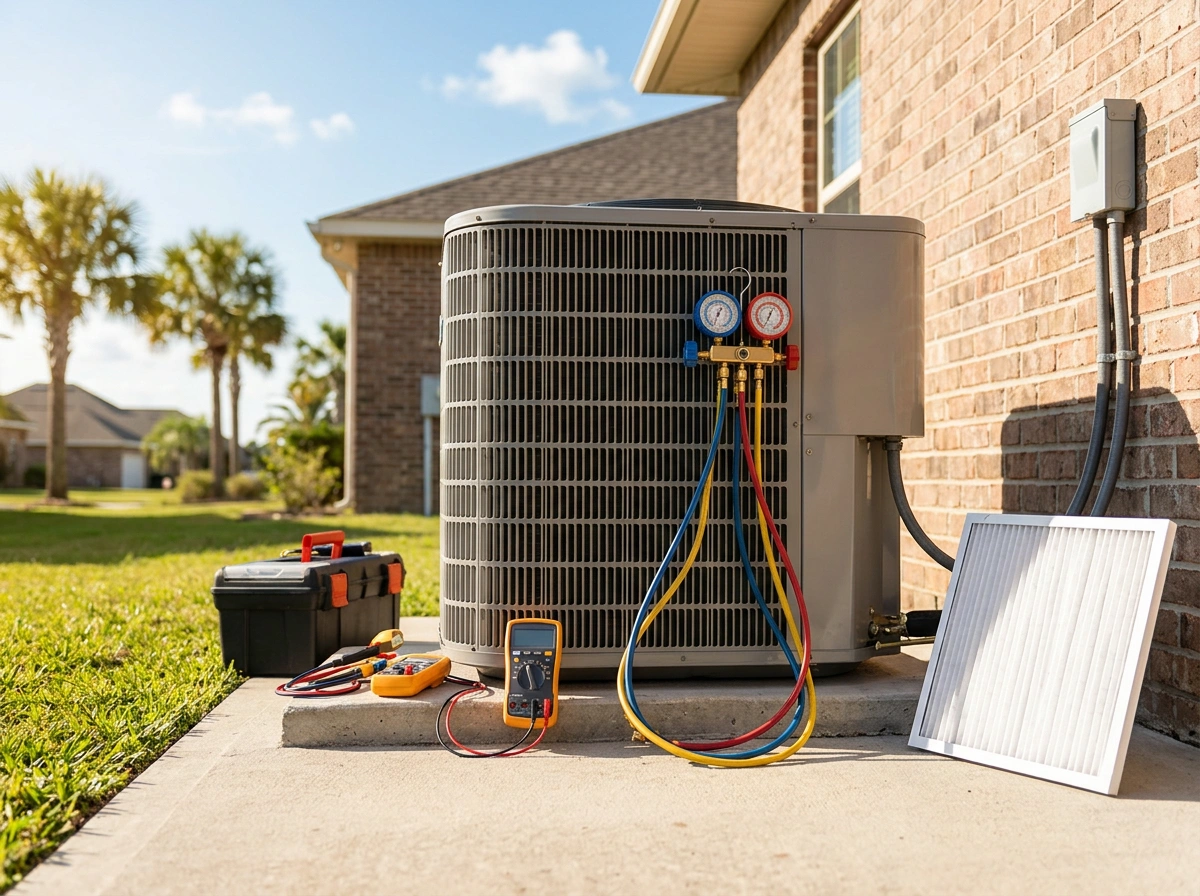
For most residential systems in the Gulf Coast, a standard HVAC maintenance visit typically costs between $75 and $200 per system. This range reflects a complete professional service, not a cursory inspection. A proper maintenance visit includes cleaning condenser and evaporator coils, checking refrigerant charge, inspecting electrical components, testing system controls, verifying airflow, flushing condensate drains, and confirming thermostat accuracy. Each of these steps addresses known stress points created by heat and humidity, both of which dominate the Gulf Coast climate for much of the year.
The upper end of the pricing range often applies to systems that require additional cleaning or extended service time. High humidity promotes algae growth in drain lines and drain pans, which must be cleared to prevent water damage and airflow issues. Salt in the air accelerates corrosion on outdoor coils and electrical contacts, particularly in coastal and near-coastal communities. Addressing these conditions requires more labor and specialized materials, which directly affects maintenance cost. These are not optional tasks or upgrades. They are part of responsible HVAC care in this region.
Many homeowners choose annual maintenance agreements rather than scheduling individual visits. These plans usually range from $150 to $300 per year and commonly include two scheduled maintenance appointments. Service agreements often provide added value through priority scheduling during peak seasons and reduced pricing on repairs identified during routine service. In a climate where air conditioning systems operate for most of the year, maintenance plans offer cost stability and reduce the likelihood of delayed service when demand is high.
HVAC maintenance costs vary depending on system configuration. A conventional split system serving a single zone typically requires less service time than more complex arrangements. Heat pumps, which are widely used throughout the Gulf Coast, generally require more detailed maintenance. Because they operate year-round for both heating and cooling, components experience continuous wear. Servicing these systems requires careful inspection of reversing valves, defrost controls, and airflow balance, all of which add time to a maintenance visit.
Ductless mini-split systems also influence maintenance pricing. Each indoor unit must be individually inspected and cleaned. In humid environments, indoor coils and blower wheels can accumulate moisture-related debris faster than homeowners expect. While these systems are known for efficiency and zoning flexibility, their maintenance demands increase in coastal climates, where moisture control is critical to performance and longevity.
Environmental exposure is one of the most significant drivers of HVAC maintenance cost in the Gulf Coast. Salt air contributes to premature coil degradation and electrical corrosion. Technicians often use specialized coil cleaners designed to remove salt residue without damaging aluminum fins. In some cases, protective treatments may be recommended to slow corrosion. High humidity further complicates maintenance by increasing the likelihood of biological growth in condensate systems. Regular flushing and treatment of drain lines are essential to prevent blockages and overflow. These factors extend service time and influence pricing, but they also protect against far more expensive failures.
System age also plays a role. Newer systems typically require fewer adjustments during routine maintenance. Older systems often demand more inspection time due to declining coil efficiency, aging electrical components, and general wear. While maintenance pricing itself does not automatically increase with age, older equipment is more likely to reveal developing issues. Capacitors, contactors, and fan motors commonly show signs of fatigue as systems approach the latter part of their service life. Identifying these issues early during maintenance can prevent unexpected breakdowns and higher repair costs.
In the Gulf Coast, HVAC maintenance has a direct impact on operating costs. Dirty coils and restricted airflow force systems to run longer cycles to maintain indoor comfort. Over an extended cooling season, even small efficiency losses can add up quickly on utility bills. Regular maintenance helps systems maintain proper heat transfer and balanced airflow, which improves efficiency and reduces unnecessary runtime. From a cost standpoint, the expense of maintenance is often offset by lower energy consumption over the course of the year.
Humidity control is another critical factor that separates Gulf Coast HVAC maintenance from service in drier regions. These systems do more than cool air. They remove moisture that affects comfort, indoor air quality, and building durability. Poor drainage, reduced airflow, or dirty evaporator coils can compromise moisture removal even if temperatures appear stable. Routine maintenance ensures that condensate systems function properly and that airflow across the coil supports effective dehumidification. This aspect of performance is easy to overlook but plays a major role in long-term comfort and property protection.
Labor demand also influences maintenance costs. The Gulf Coast experiences extended periods of high temperatures, which keeps HVAC professionals in constant demand. Maintenance pricing reflects the training, certification, and experience required to service modern equipment that relies on advanced electronics and variable-speed technology. During peak summer months, scheduling becomes more competitive, and homeowners without service agreements may face longer wait times or higher rates. Proactive maintenance scheduling helps avoid these seasonal pressures.
It is important to distinguish between maintenance and repair. Maintenance focuses on prevention through cleaning, testing, and adjustment. Repairs address specific component failures. While maintenance visits may uncover issues that require corrective action, addressing those problems early typically reduces long-term costs. Extremely low-priced service offers that promise comprehensive maintenance but deliver only a brief inspection often fail to address moisture-related risks that are common in Gulf Coast systems. Incomplete service can lead to higher repair expenses down the line.
For buyers evaluating a home, HVAC maintenance history offers valuable insight into system condition. A documented record of regular service suggests that equipment has been properly cared for and operated within recommended parameters. In the Gulf Coast, where systems work harder for longer periods, consistent maintenance helps equipment reach its expected service life of roughly 12 to 15 years. Premature replacement due to neglect represents a far greater expense than maintaining a system properly over time.
HVAC maintenance helps keep heating and cooling systems prepared for the demands of Gulf Coast weather. Regular service supports reliable performance, energy efficiency, and consistent indoor comfort. Gulf Coast Heating & AC in Pinellas Park, FL works with homeowners to review system conditions and recommend appropriate maintenance for long-term operation. Our team provides clear guidance on service options and what to expect from routine care. Contact us to discuss HVAC maintenance and keep your system running smoothly.
We are located here:

