

Living near the coast offers plenty of advantages, including warm weather, ocean breezes, and long summers. Coastal environments also create difficult operating conditions for HVAC systems. High humidity, airborne salt, sand, and year-round cooling demands force heating and cooling equipment to work harder than systems in drier inland regions. One maintenance task that often gets overlooked is air filter replacement. Many homeowners underestimate how quickly filters collect debris in coastal climates, but keeping up with filter changes plays a major role in airflow, indoor comfort, energy efficiency, and equipment lifespan.
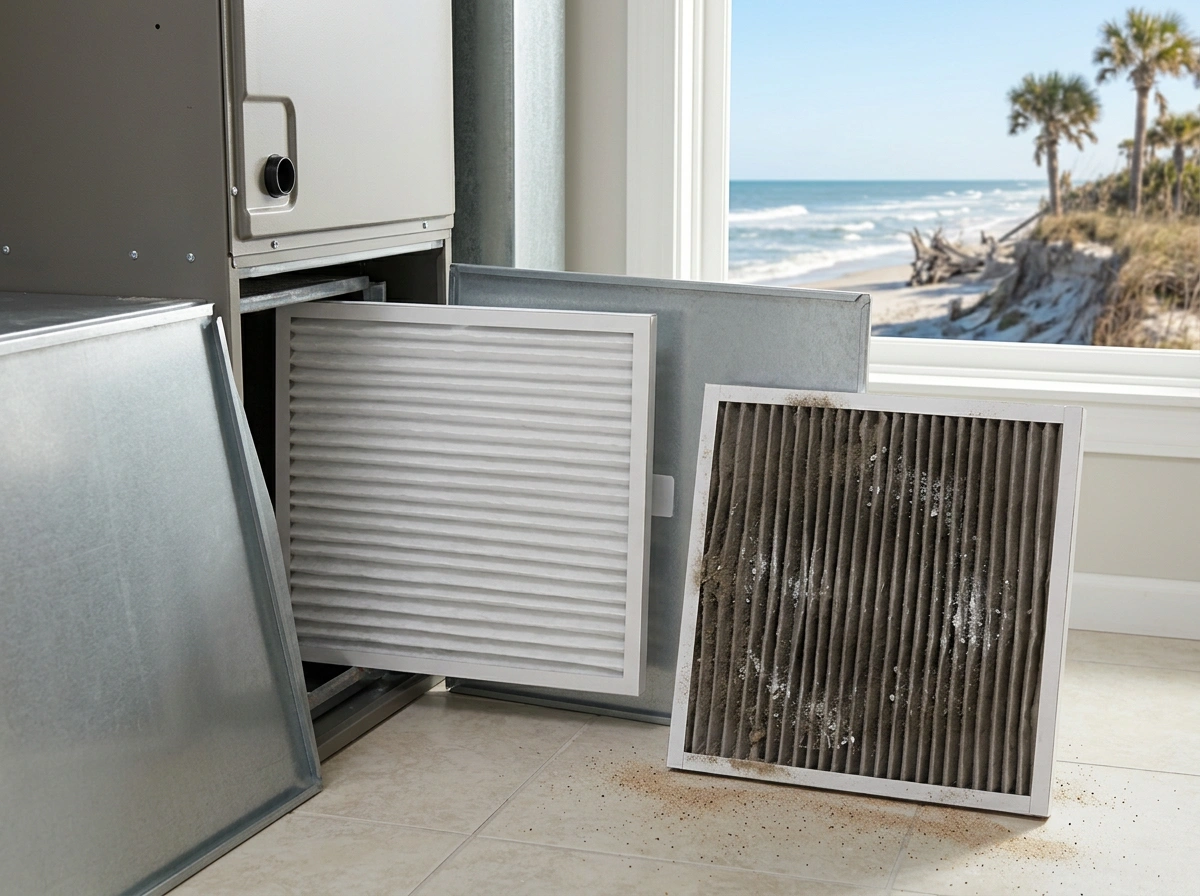
Air filters are designed to trap airborne particles before they circulate through the HVAC system and living space. In a coastal climate, the filter deals with much more than ordinary household dust. Humidity in the air causes particles to cling together and collect more densely across the filter surface. At the same time, coastal winds carry salt particles, pollen, sand, and other contaminants that eventually make their way indoors.
Air conditioning systems in coastal areas also tend to run longer throughout the year because of persistent heat and moisture. The longer the system operates, the more air passes through the filter. As debris builds up, airflow becomes restricted, and the HVAC system has to work harder to maintain indoor temperatures. Homeowners often notice signs such as uneven cooling, weak airflow from vents, longer cooling cycles, or higher utility bills before realizing the filter needs replacement.
Salt exposure adds another layer of strain to HVAC systems near the coast. Most homeowners associate salt damage with outdoor condenser units, but salt particles also collect inside filters and duct systems over time. Homes located close to the shoreline usually experience faster buildup because ocean air constantly carries microscopic salt residue inland. Storm season can make the problem even worse by increasing airborne debris and moisture levels.
Conditions inside the home also influence how quickly a filter becomes dirty. Homes with pets often need more frequent filter replacements because pet hair and dander accumulate rapidly within the filter media. Larger households generate more airborne particles through cooking, cleaning, laundry, and daily activities. Coastal homeowners who regularly open windows and doors to enjoy fresh air may unintentionally allow additional dust, pollen, and salt particles inside the home.
For most coastal homes, HVAC professionals recommend inspecting the air filter every 30 days and replacing it every 30 to 60 days, depending on indoor conditions and system usage. Some households may need monthly replacement, especially if the HVAC system runs continuously during hot weather or if pets are present in the home. Waiting three months or longer often allows airflow restrictions to develop before homeowners recognize a problem.
The type of filter installed also affects replacement schedules. Standard fiberglass filters usually require replacement every month because they capture only larger particles and clog quickly in humid environments. Pleated filters generally provide better filtration and may last slightly longer, but they still need regular inspection in coastal climates. High-efficiency filters with higher MERV ratings capture smaller particles such as allergens and fine dust, though they can also become clogged faster if airflow demands are high.
Many homeowners rely entirely on the replacement timeline printed on the filter packaging. Those recommendations are often based on average indoor conditions and moderate HVAC usage. Coastal homes rarely fall into that category. Humidity, salt exposure, and extended cooling seasons create more demanding operating conditions that shorten filter lifespan considerably.
Visual inspection remains one of the best ways to determine when a filter should be changed. If the filter appears gray, dusty, or coated with visible debris, replacement should happen immediately. A filter does not need to appear completely blocked to affect HVAC performance. Even moderate buildup can reduce airflow enough to place additional strain on the blower motor and cooling components.
Reusable filters also require careful attention. Homeowners using washable filters should clean them thoroughly and allow them to dry completely before reinstalling them. A damp filter can encourage microbial growth inside the HVAC system, especially in humid coastal conditions where moisture already presents ongoing challenges.
Dirty air filters affect much more than airflow. Coastal climates already create indoor air quality concerns because humidity encourages mold spores, allergens, and airborne contaminants to circulate more easily. Once a filter becomes overloaded with debris, its ability to capture particles decreases significantly. Dust, pollen, and other contaminants can then move freely through the ductwork and into living areas.
Indoor humidity levels may also become harder to control when airflow is restricted. HVAC systems remove moisture from indoor air during the cooling process, but reduced airflow limits that function. As a result, homeowners may notice rooms feeling damp or uncomfortable even when the thermostat indicates the correct temperature. Excess indoor moisture can also contribute to mold growth around vents, ductwork, and evaporator coils.
Energy efficiency is another major concern. Coastal HVAC systems often operate for extended periods throughout the year, particularly during long summer seasons. A clogged filter forces the system to run longer to achieve thermostat settings, increasing electricity usage and monthly utility costs. Replacing a dirty filter restores proper airflow and helps the system operate more efficiently.
Routine filter replacement also helps protect major HVAC components from unnecessary wear. Restricted airflow places additional strain on blower motors, evaporator coils, and compressors. Over time, that stress increases the risk of breakdowns and expensive repairs. In severe cases, poor airflow can contribute to frozen evaporator coils that reduce cooling performance and create additional service issues.
If your HVAC system is struggling with airflow issues, uneven cooling, or rising energy costs, professional maintenance can help identify the source of the problem before it leads to costly repairs. Our team at Gulf Coast Heating & AC can inspect your system, recommend the right filter for your home, and help keep your equipment operating efficiently in demanding coastal conditions. Schedule a Service today to improve comfort, airflow, and overall HVAC performance.
We are located here:

