

Along the Gulf Coast, HVAC systems do not operate under ordinary conditions. They function in an environment defined by extended heat, persistent humidity, salt exposure, and frequent severe weather. These factors reshape how heating and cooling equipment ages, performs, and ultimately fails. For homeowners who want dependable comfort, the question of maintenance frequency is rooted in climate reality rather than convenience. In this region, maintenance is a deliberate, ongoing process that reflects how hard these systems are asked to work.
Cooling systems in the Gulf Coast often run for most of the year. In many homes, air conditioners begin operating in early spring and do not slow down until late fall. During peak summer months, daily runtime can be extensive, with systems cycling for long stretches to manage both temperature and humidity. This sustained workload accelerates wear on compressors, blower motors, contactors, capacitors, and electrical connections. Components that might last for years in milder climates can degrade far more quickly when exposed to constant heat and moisture. Without regular inspection and service, minor mechanical or electrical issues can quietly worsen until they result in reduced efficiency or sudden failure during the hottest part of the year.
Humidity is one of the defining characteristics of the Gulf Coast, and it plays a central role in shaping HVAC maintenance needs. Air conditioning systems in this region function as dehumidifiers as much as cooling machines. When warm air passes over the evaporator coil, moisture collects and flows away through the condensate system. Over time, algae, sediment, and debris can accumulate in drain lines and pans. When drainage is restricted, water may back up, overflow, or linger within the system. This can reduce humidity control, damage surrounding materials, and contribute to indoor air quality concerns.
Routine maintenance allows technicians to clean evaporator coils, flush condensate lines, and verify proper drainage. These steps help ensure that moisture is removed efficiently and safely. In a climate where high humidity is present nearly year-round, overlooking this aspect of maintenance can lead to comfort complaints and costly secondary damage.
Salt exposure further distinguishes the Gulf Coast from inland regions. Salt particles carried by coastal winds settle on outdoor condenser coils, metal cabinets, and electrical terminals. Even homes located several miles inland are not immune. Salt accelerates corrosion, particularly on aluminum fins, copper tubing, and steel components. As corrosion develops, heat transfer efficiency declines and electrical resistance increases. The system must then work harder to deliver the same level of cooling, which raises energy use and increases strain on mechanical components.
Maintenance visits provide the opportunity to rinse coils, inspect electrical connections, and identify early signs of corrosion. Addressing these issues early can slow long-term damage and preserve system performance. Without this attention, corrosion can progress unnoticed until it compromises major components.
Severe weather is another unavoidable factor. Tropical storms and hurricanes can expose HVAC systems to wind-driven debris, flooding, and power fluctuations. Even when a system appears to function normally after a storm, internal damage may exist. Electrical components can be weakened by voltage irregularities, insulation can be displaced, and debris can obstruct airflow. Post-storm inspections are an important extension of routine maintenance, helping to identify hidden problems before they develop into larger failures.
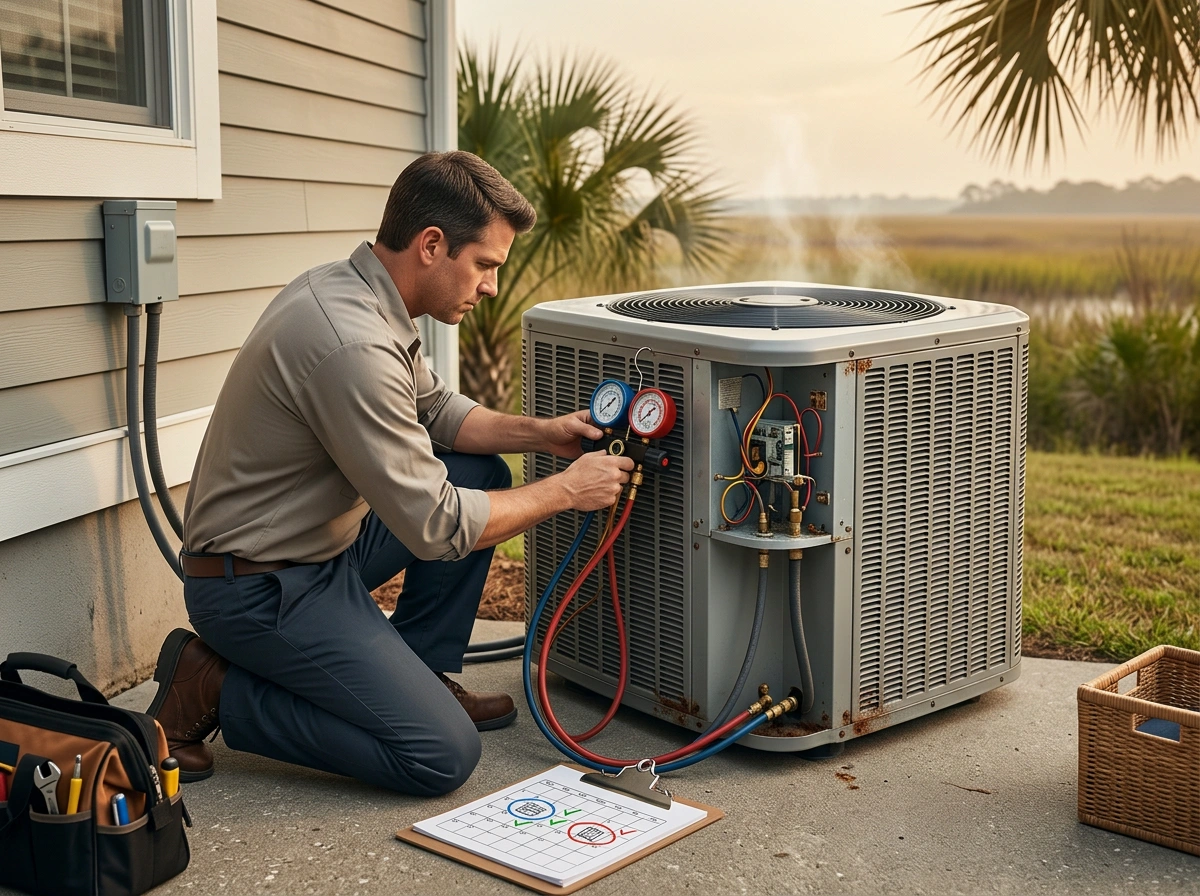
Given the demands placed on HVAC systems along the Gulf Coast, a twice-yearly maintenance schedule is a practical baseline for most homes. One visit should be scheduled before the cooling season begins, typically in late winter or early spring. This service focuses on preparing the system for months of sustained operation. Technicians check refrigerant levels, clean coils, test electrical components, verify airflow, and ensure that safety controls are functioning properly. Addressing these details before temperatures rise helps prevent performance issues during periods of peak demand.
A second maintenance visit later in the year serves a different purpose. After months of heavy cooling use, systems benefit from a thorough inspection to identify wear related to heat and humidity. Condensate systems can be cleaned again, electrical components can be evaluated for signs of fatigue, and airflow can be adjusted if needed. Although heating demand is limited in the Gulf Coast, this visit also allows technicians to inspect heating elements, heat exchangers, or reversing valves to confirm safe operation when cooler weather arrives.
In some cases, additional service visits are justified. Older systems often require closer monitoring as components near the end of their expected service life. High-efficiency systems with advanced electronics and variable-speed components benefit from regular calibration to maintain precise operation. Homes with high occupancy or extended daily runtime also place greater demands on HVAC equipment. In these situations, maintenance schedules should reflect actual usage rather than a fixed calendar.
Homes located closer to the coast may also require more frequent attention due to increased salt exposure. Outdoor units in these areas experience faster corrosion and may benefit from additional coil cleaning and inspection. The goal is not to over-service equipment but to align maintenance frequency with environmental conditions and system workload.
Storm-related inspections should be viewed as part of responsible system care rather than an exception. After major weather events, a targeted inspection can reveal issues that routine operation may not immediately expose. Loose electrical connections, damaged insulation, or restricted airflow caused by debris can all affect performance and reliability if left unaddressed.
A consistent maintenance strategy delivers tangible long-term benefits in the Gulf Coast climate. Systems that receive regular professional care tend to operate closer to their design specifications. Clean heat exchange surfaces, balanced refrigerant levels, and unrestricted airflow allow equipment to cool efficiently even during prolonged heat waves. This stability contributes to more consistent indoor temperatures and fewer comfort complaints.
Energy efficiency is one of the most noticeable outcomes. When coils are dirty or airflow is restricted, HVAC systems compensate by running longer cycles. In a region where cooling costs represent a significant portion of household energy use, this inefficiency becomes costly over time. Routine maintenance helps control energy consumption by restoring proper system operation and reducing unnecessary runtime.
Indoor air quality is another important consideration. Gulf Coast homes are often sealed tightly to manage humidity, which places greater responsibility on HVAC systems to circulate and filter indoor air. Filters can load quickly, blower assemblies can accumulate dust, and ductwork can be affected by moisture. Maintenance visits support healthier indoor environments by ensuring that filtration and airflow remain effective and that moisture does not linger within the system.
Perhaps the most compelling long-term benefit is equipment longevity. Heat, humidity, and salt exposure all accelerate mechanical and electrical wear. Systems that are neglected often experience premature failure due to cumulative stress on key components. In contrast, systems that are maintained consistently are more likely to reach or exceed their expected service life. This reduces the frequency of emergency repairs and delays the need for major replacements.
Maintenance is also a way to better understand system behavior over time. Regular inspections provide insight into how components respond to environmental stress and usage patterns. This knowledge supports informed decisions about repairs, upgrades, and eventual replacement planning. Maintenance becomes a tool for system stewardship rather than a reaction to breakdowns.
For homeowners seeking HVAC maintenance guidance shaped by local conditions and real-world performance, Gulf Coast Heating & AC in Pinellas Park, FL, offers dependable expertise rooted in the demands of the Gulf Coast climate. Our team focuses on practical service and thoughtful planning to help protect your system and keep it running efficiently year-round. Request a quote today and take a confident step toward caring for your HVAC system.
We are located here:

