

Along the Gulf Coast, air conditioning systems do not get a gentle warm-up period. They transition quickly from light spring duty to long, punishing summer run times that expose every weakness in design, installation, and upkeep. High humidity, salt-laden air, and extended daily operation create a climate where even well-built systems can struggle if routine maintenance is delayed. For homeowners who depend on consistent indoor comfort and for HVAC professionals who understand how systems age under stress, the early warning signs of needed maintenance are rarely subtle once you know what to watch for. They appear in performance changes, sound, moisture behavior, and energy use long before a complete breakdown occurs.
The challenge is that many of these warning signs develop slowly. A system may continue to cool the home, just not as efficiently or reliably as it should. By the time outdoor temperatures peak, minor issues that could have been corrected easily can escalate into compressor failures, electrical problems, or total system shutdowns. Recognizing these signs early protects equipment lifespan, maintains indoor air quality, and ensures dependable performance when the Gulf Coast heat settles in for the long haul.
One of the earliest and most telling indicators that an air conditioning system needs maintenance is a noticeable change in airflow. When vents deliver less air than they did previously, or when airflow feels uneven across different rooms, the system is almost always compensating for internal restrictions. A dirty air filter is the most common culprit, but it is rarely the only one. Evaporator coils coated with dust, blower wheels weighed down by debris, or partially blocked ductwork all force the system to work harder to move air through the home.
In humid coastal climates, moisture causes dust and airborne particles to cling to surfaces more aggressively. Over time, this buildup reduces heat transfer efficiency and strains the blower motor. Reduced airflow also interferes with the system’s ability to remove humidity, creating a cycle where comfort declines even though the system appears to be running constantly. Addressing airflow issues through maintenance restores proper circulation and helps the system operate closer to its intended capacity.
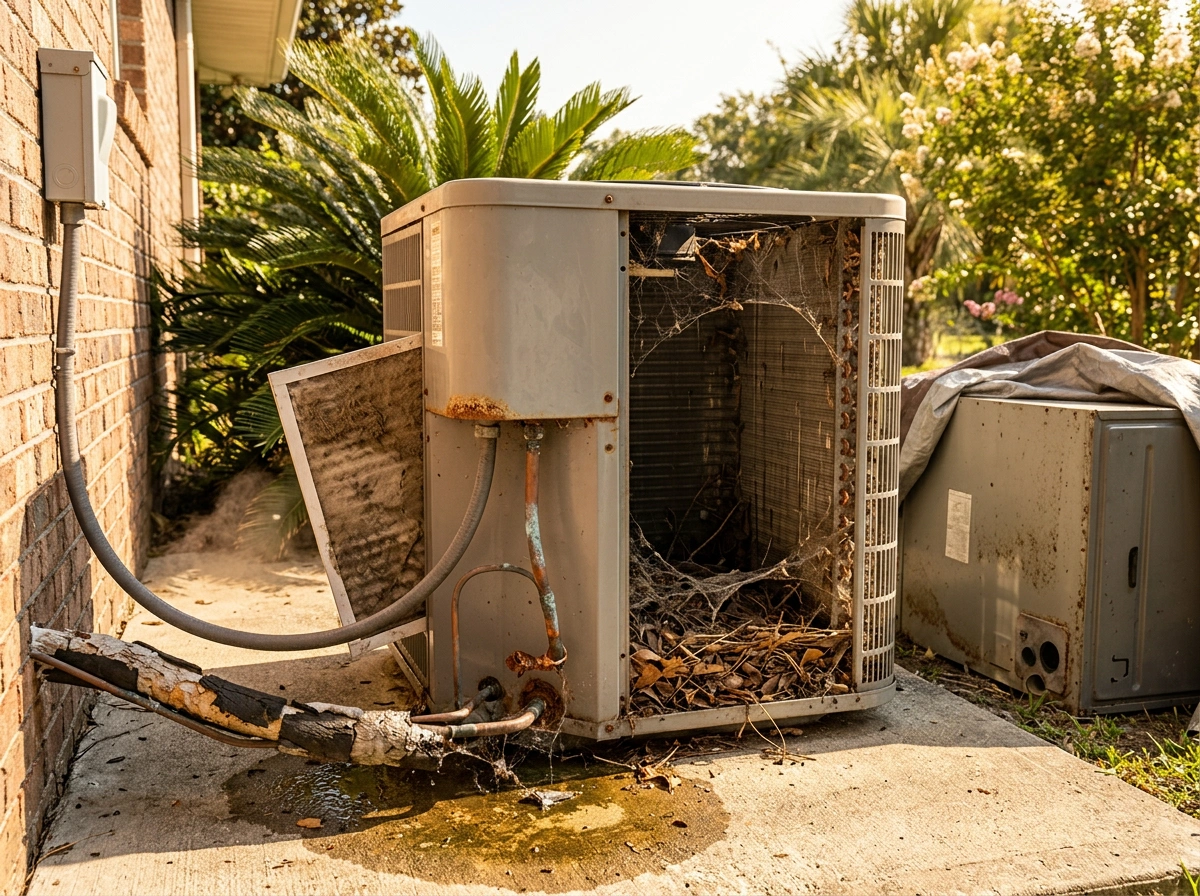
Another performance-related sign appears when cooling cycles grow longer without producing meaningful temperature improvement. When an air conditioner runs for extended periods yet struggles to maintain the thermostat setting, outdoor heat alone is rarely the full explanation. This behavior often points to dirty condenser coils, restricted airflow through the outdoor unit, or declining compressor performance. Along the Gulf Coast, condenser coils face constant exposure to salt air, pollen, grass clippings, and wind-driven debris. Even a thin layer of buildup can significantly reduce the system’s ability to reject heat.
As heat rejection efficiency drops, the compressor works longer and harder to achieve the same result. This increases energy consumption and accelerates wear on one of the most expensive components in the system. Maintenance that includes coil cleaning, airflow verification, and system performance testing helps restore efficiency before peak summer temperatures amplify the problem.
Humidity control problems are another sign that internal performance has declined. In this region, comfort depends as much on moisture removal as it does on temperature reduction. When indoor air feels heavy or damp despite adequate cooling, the system is no longer managing latent heat effectively. Dirty evaporator coils, improper airflow, or incorrect refrigerant levels can all reduce moisture removal capacity. Left unresolved, poor humidity control affects indoor air quality, encourages mold growth, and places additional stress on the system as it attempts to compensate.
Air conditioners develop a familiar operating sound over time. Changes to that sound should never be dismissed as normal aging. Rattling noises often indicate loose hardware or debris inside the outdoor unit. Buzzing sounds may point to electrical problems involving contactors or capacitors. Grinding or squealing noises frequently signal motor or fan bearing wear. These issues tend to worsen under heavy load, which makes early-season detection particularly valuable.
Electrical components are especially vulnerable in high-humidity environments. Corrosion can weaken connections and reduce component reliability. A failing capacitor or contactor may allow the system to run inconsistently for weeks before failing outright during extreme heat. Maintenance inspections identify these components early and replace them before they cause a system-wide shutdown.
Odors provide another layer of insight into system condition. Musty smells coming from vents or the air handler often indicate microbial growth on evaporator coils or inside the condensate system. High humidity and warm temperatures create ideal conditions for mold and mildew when moisture is not properly managed. These odors rarely resolve on their own and tend to worsen as run times increase.
Electrical or burning odors require immediate attention. They may signal overheating wiring, failing motors, or damaged insulation. While these issues may not yet prevent the system from operating, they present safety risks that should never be ignored. Routine maintenance addresses both moisture-related problems and electrical concerns, reducing the chance of unexpected failures or hazardous conditions during peak operation.
Water around the indoor unit or moisture near vents is another warning sign that maintenance is overdue. Condensate drain systems are particularly vulnerable in Gulf Coast climates. Algae and debris can accumulate quickly, restricting drainage. A partially blocked drain line may allow the system to continue running for a time, but it often leads to water damage, mold growth, or automatic shutdown when safety switches are triggered.
Maintenance includes clearing drain lines, inspecting drain pans, and confirming proper drainage. These steps reduce the risk of water-related problems that can interrupt cooling during the hottest part of the year and cause damage beyond the HVAC system itself.
Energy usage patterns often reveal system problems before comfort complaints arise. When energy bills increase despite consistent cooling habits, declining efficiency is usually the cause. Dirty coils, aging motors, and weakened electrical components force the system to draw more power to meet demand. This increase often develops gradually and may go unnoticed until summer utility bills climb sharply.
Preventive maintenance improves efficiency by restoring clean heat transfer surfaces, tightening electrical connections, and verifying that motors and fans operate within proper ranges. These adjustments help stabilize energy consumption and reduce the financial impact of extended cooling seasons.
Short cycling is another efficiency issue that should raise concern. When an air conditioner turns on and off frequently without completing full cooling cycles, it experiences unnecessary wear. Short cycling reduces humidity control, increases energy consumption, and places added stress on the compressor. Common causes include airflow restrictions, dirty coils, thermostat calibration issues, or electrical faults.
In Gulf Coast climates, short cycling accelerates wear quickly due to high demand and long run times. Maintenance inspections identify the underlying causes and correct them before they shorten system lifespan or lead to premature failure.
Inconsistent temperatures throughout the home also signal efficiency and airflow problems. When certain rooms remain warmer than others, the issue may stem from airflow imbalance, duct leakage, or declining system performance. Many coastal homes rely on ductwork routed through attic spaces, where heat exposure and aging insulation can worsen air loss over time. Maintenance evaluations help identify these conditions early so corrections can be made before comfort problems become more pronounced during peak heat.
System age and service history also influence how these warning signs develop. Even high-quality equipment experiences gradual performance decline without routine care. Coastal conditions accelerate corrosion and wear, particularly on outdoor components and electrical connections. Annual AC maintenance provides an opportunity to identify aging parts, address corrosion, and confirm that the system continues to operate within manufacturer specifications.
Taking time now to prepare your air conditioning system can make a noticeable difference in how it performs during the hottest months of the year. A professional inspection and tune-up help identify early warning signs, restore efficiency, and reduce the likelihood of unexpected breakdowns when demand is at its peak. Gulf Coast Heating & AC in Pinellas Park, FL, provides thorough maintenance focused on keeping your system reliable and ready for Gulf Coast summer conditions. Schedule your AC maintenance today to help ensure steady comfort and dependable performance when you need it most.
We are located here:

