

A professional HVAC tune-up is one of those services homeowners hear about often but rarely see explained in full. It is commonly described as routine maintenance, yet that phrase does little to capture the depth of work involved or the practical value it delivers. A true tune-up is a systematic evaluation of how a heating and cooling system performs under real operating conditions. It brings together inspection, testing, cleaning, and verification to confirm that the system can meet demand safely and efficiently. For homeowners who want reliable comfort and predictable operating costs, understanding what happens during this service provides clarity and reinforces why it remains a cornerstone of responsible system ownership.
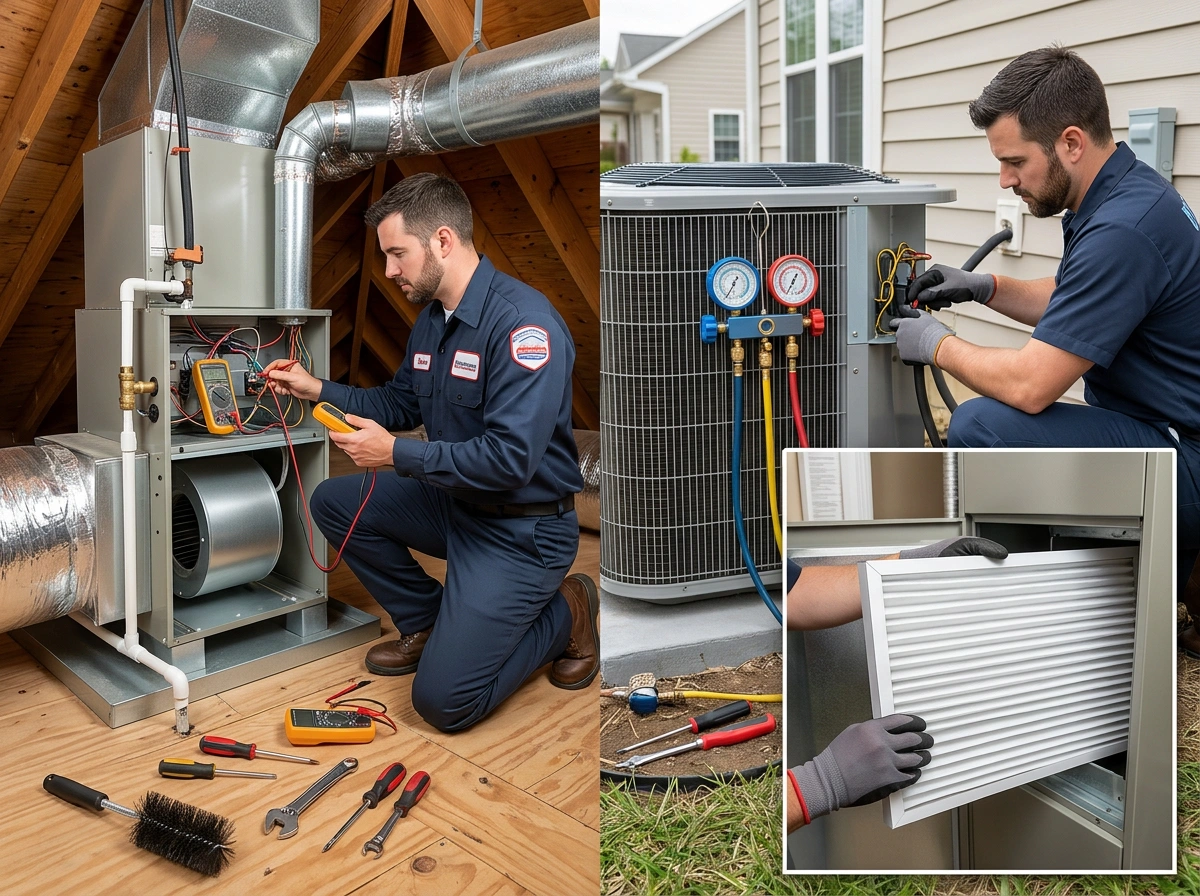
The process begins with a comprehensive system review. The technician starts by identifying the type of equipment installed and how it is integrated into the home. This includes noting whether the system is a split configuration, a packaged unit, a heat pump, or a gas furnace, along with the age of the equipment and any visible signs of past repair. These details establish a performance baseline and guide the rest of the tune-up. Every system has operating ranges defined by its manufacturer, and recognizing those parameters at the outset ensures that later measurements are meaningful.
Airflow assessment follows closely behind the initial review. Proper airflow is essential to both comfort and equipment longevity. When airflow is restricted, the system must work harder to deliver the same level of heating or cooling, which increases energy use and accelerates wear. During a tune-up, the air filter is inspected for cleanliness, correct sizing, and proper installation. A filter that is clogged or poorly fitted can undermine system performance regardless of how well the rest of the equipment is functioning. The technician also checks airflow at supply and return points near the air handler to confirm that air is moving as intended through the system.
Electrical performance is another critical focus during this stage. Modern HVAC systems rely on a network of electrical components that must operate within precise limits. The technician inspects wiring connections, contactors, capacitors, and relays for signs of deterioration or heat damage. Voltage and amperage readings are taken and compared against manufacturer specifications. These measurements reveal whether motors and compressors are drawing appropriate current or operating under strain. Identifying electrical irregularities early can prevent sudden failures that often occur during periods of peak demand.
The thermostat is evaluated as part of the performance check because it governs how the entire system responds to indoor conditions. Accurate temperature sensing and proper communication with the heating and cooling equipment are essential for stable operation. The technician confirms that the thermostat reads room temperature correctly and that it signals the system to cycle on and off at appropriate intervals. If the home uses a programmable or smart thermostat, settings may be reviewed to ensure they support consistent operation rather than frequent short cycles that increase wear and reduce efficiency.
Cleaning directly affects how efficiently a system transfers heat and manages airflow. For cooling systems, the evaporator and condenser coils are inspected for dirt, debris, or buildup. Even a thin layer of residue on these coils can interfere with heat exchange, forcing the system to run longer to achieve the desired temperature. When needed, coils are cleaned to restore proper heat transfer and support efficient cooling performance.
Heating components are given equal attention. Burners are inspected for cleanliness and proper alignment to ensure consistent flame characteristics and reliable heat output. Any buildup that could disrupt airflow or combustion is addressed. These inspections help maintain efficient operation while supporting safe combustion, which is especially important for gas-fueled systems.
Mechanical components are also evaluated during this phase. Motors, bearings, and other moving parts are subject to constant motion during system operation. Where applicable, lubrication is applied to reduce friction and minimize heat buildup. This service supports smooth, quiet operation and reduces long-term mechanical stress that can lead to premature failure. The technician also checks belts, pulleys, and mounting hardware for proper tension and alignment when present.
Refrigerant performance is a defining element of cooling system maintenance. During a tune-up, the technician measures system pressures and refrigerant levels to confirm they fall within the manufacturer’s specified range. Improper refrigerant levels can reduce cooling capacity, impair humidity control, and place excessive strain on the compressor. Visible refrigerant lines and fittings are inspected for signs of damage or leakage. Even small leaks can gradually erode performance and lead to higher operating costs if left unaddressed.
For systems that rely on gas or other fuels, safety inspections are an integral part of the tune-up. Ignition systems are tested for reliable startup, and burners are observed to ensure steady and even flame patterns. Heat exchangers are inspected for visible signs of wear or damage that could compromise performance or safety. Venting pathways are examined to confirm that combustion gases are exiting the home properly, which is essential for maintaining safe indoor air conditions.
Moisture management receives careful attention as the tune-up progresses, particularly in regions with high humidity. Air conditioning systems produce condensation that must be drained away efficiently. The technician inspects condensate drain lines and pans for clogs, leaks, or buildup that could lead to water damage or system shutdowns. Clearing and testing these components helps ensure reliable drainage and supports indoor air quality by reducing the risk of microbial growth.
While a standard tune-up does not include a full duct inspection, technicians often perform a visual review of accessible duct connections near the air handler. Loose joints, damaged insulation, or visible gaps can significantly reduce system efficiency and affect comfort. Identifying these issues early allows homeowners to plan corrective action before energy losses or uneven temperatures become persistent problems.
Once inspections, cleaning, and adjustments are complete, the system is operated under normal conditions. The technician observes startup behavior, listens for abnormal sounds, and measures temperature changes across the system. These operational checks confirm that the system responds correctly to thermostat commands and that performance has been restored or maintained. Temperature differentials and cycle behavior provide clear indicators of how effectively the system is heating or cooling the home.
The final and often most valuable part of the tune-up is the review with the homeowner. After testing is complete, the technician explains what was inspected, what was serviced, and whether any components show signs of developing issues. This discussion is grounded in observed conditions and measured performance rather than speculation. Homeowners receive practical, actionable information that helps them understand current system health and plan future maintenance or repairs with confidence.
Regular tune-ups offer benefits that extend well beyond immediate performance improvements. Systems that receive consistent professional maintenance tend to operate more efficiently, experience fewer unexpected breakdowns, and maintain stable comfort during periods of extreme heat or cold. Routine inspections also support manufacturer warranty requirements and provide documentation of responsible system care.
Understanding what happens during a professional HVAC tune-up helps homeowners see why this service remains a central part of long term system reliability. Homeowners who want their heating and cooling systems maintained with this level of care can schedule a professional tune-up with Gulf Coast Heating & AC in Pinellas Park, FL. One thorough service visit provides clear insight into system condition and dependable comfort heading into every season.
We are located here:

