

Homes in coastal and high-humidity regions place unique demands on heating and cooling equipment. Moisture in the air, salt carried from nearby shorelines, long cooling seasons, and frequent storms all influence how HVAC systems operate over time. These environmental conditions affect airflow components, metal surfaces, and system efficiency, which makes consistent HVAC maintenance an important part of system care. Regular service helps keep coils clean, drainage systems clear, electrical components protected, and airflow balanced. With maintenance that accounts for coastal conditions, homeowners can support steady performance, energy efficiency, and dependable comfort throughout the year.
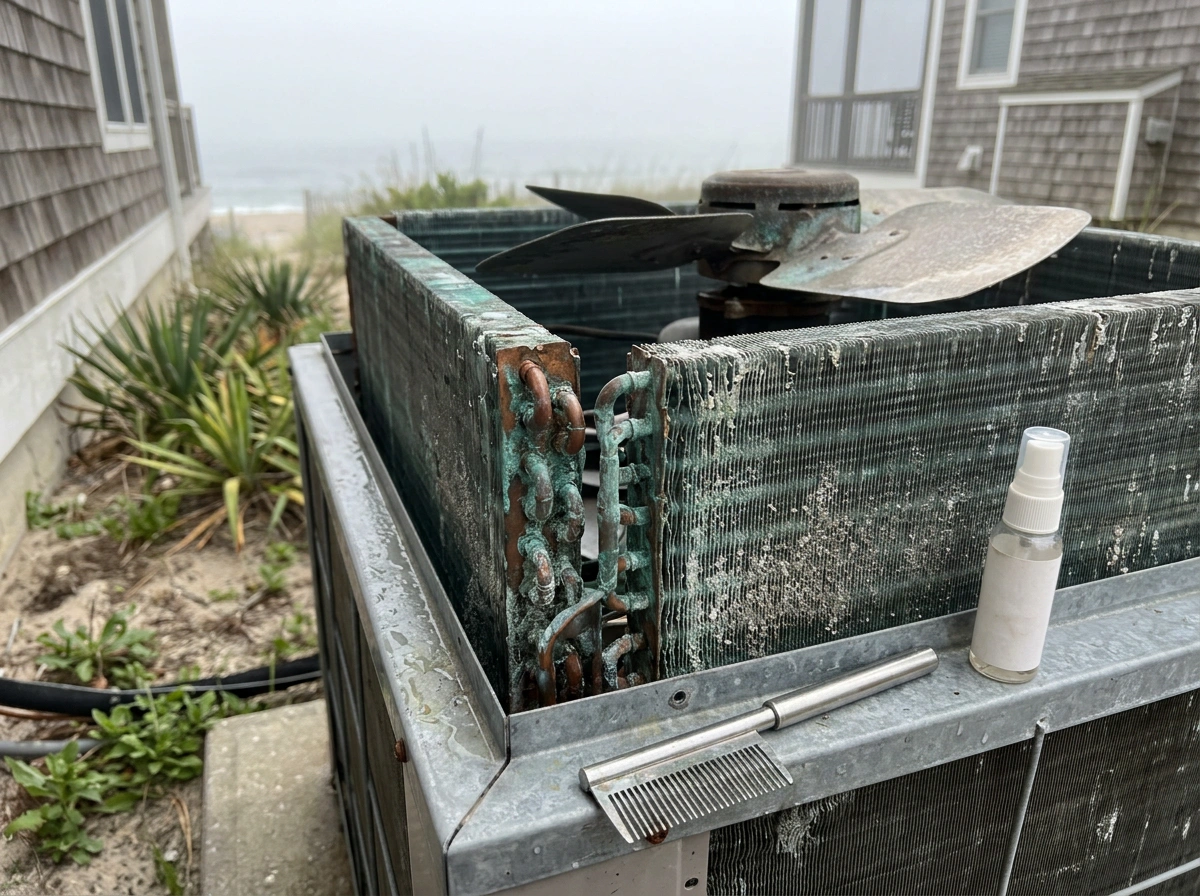
In coastal regions, airborne salt is a constant presence. Carried inland by prevailing winds, salt particles settle on outdoor condenser coils, cabinets, mounting hardware, and electrical connections. When salt combines with moisture, it accelerates corrosion at a rate far greater than what is seen in inland environments. Aluminum fins pit, steel components rust, and protective finishes degrade more quickly, even on newer equipment.
This corrosion directly affects system operation. Condenser coils rely on clean, intact fins to release heat efficiently. As corrosion damages these surfaces, heat transfer declines. The compressor compensates by running longer cycles to maintain cooling output. Longer runtimes increase electrical consumption and place added stress on the compressor and condenser fan motor. Over time, this leads to reduced efficiency and earlier component wear.
Refrigerant circuits are especially vulnerable in salt-air environments. Corrosion weakens coil tubing and brazed joints, increasing the likelihood of slow refrigerant leaks. These leaks often go unnoticed until cooling performance drops or operating pressures move outside normal ranges. Even small refrigerant losses force the compressor to operate under higher thermal stress, raising discharge temperatures and accelerating wear. Regular inspection of coil condition and refrigerant performance is therefore a foundational element of coastal HVAC maintenance.
Structural components are not immune. Fasteners and mounting brackets exposed to salt and moisture corrode faster, which can loosen equipment over time. Increased vibration from unsecured components adds stress to refrigerant lines and electrical connections. Maintenance in coastal areas often includes detailed hardware inspections and corrective measures that would be considered excessive in drier climates but are necessary to maintain system stability near the coast.
Humidity reshapes the role of air conditioning. In moisture-heavy climates, HVAC systems are tasked with removing substantial amounts of water from the air for much of the year. Every cooling cycle produces condensate, and in humid regions, that condensate production is continuous. Drain pans, condensate lines, and internal surfaces remain wet for long periods, creating favorable conditions for biological growth.
Algae and bacterial buildup in drain lines is a common issue in these environments. When drainage becomes restricted, water can back up into air handlers or overflow into surrounding building materials. This type of moisture damage often originates from minor maintenance oversights rather than equipment failure. Regular cleaning of drain pans and lines is therefore a core requirement, not an optional service.
Evaporator coils face similar exposure. Coils that stay damp between cycles are prone to biofilm accumulation. This thin layer of organic material clings to coil surfaces, reducing heat absorption and restricting airflow. As airflow declines, cooling efficiency suffers. Systems run longer while delivering less effective humidity control, which further compounds indoor comfort problems. Coil cleanliness plays a direct role in maintaining both performance and indoor air quality in humid climates.
Airflow itself becomes a central concern. Dirty filters, undersized returns, or poorly balanced duct systems reduce the volume of air moving across the evaporator coil. Reduced airflow can lower coil temperatures enough to cause ice formation. When ice melts, excess water enters the system, stressing drainage components and increasing the risk of leaks. Maintenance practices in high-humidity regions often include airflow testing and duct inspection to ensure systems operate within proper design limits.
Indoor air quality is closely tied to moisture control. Elevated humidity supports mold growth and dust mite populations, both of which can circulate through ductwork if filtration and system cleanliness are inadequate. HVAC maintenance addresses these risks indirectly by maintaining clean coils, effective filtration, and proper moisture removal. While HVAC systems are not air purifiers, proper maintenance reduces the environmental conditions that allow indoor air quality issues to escalate.
In coastal and high-humidity regions, cooling demand rarely disappears. Many systems operate daily for most of the year, with only brief periods of reduced workload. This extended runtime accelerates wear on compressors, blower motors, and bearings. Components accumulate operating hours at a faster pace than in temperate climates, which shortens maintenance intervals and increases the importance of preventive service.
Electrical components are particularly sensitive to moisture exposure. Humid air and salt accelerate oxidation on terminals, contactors, and circuit boards. Increased resistance at electrical connections reduces efficiency and can cause intermittent performance issues that are difficult to diagnose without thorough inspection. Preventive maintenance in coastal regions often places greater emphasis on electrical testing, connection tightening, and capacitor evaluation to prevent unexpected outages during peak demand.
Refrigerant system performance remains a consistent focus due to the combined effects of corrosion and extended operation. Gradual refrigerant loss reduces capacity and increases compressor workload. Operating under low refrigerant conditions raises internal temperatures and shortens compressor life. Routine pressure checks and performance evaluations help identify these issues early, before damage becomes irreversible.
Coastal weather patterns further complicate maintenance demands. Heavy rain, high winds, and tropical systems expose outdoor units to debris and moisture. Even without flooding, wind-driven rain can infiltrate electrical compartments, and debris can obstruct airflow through condenser coils. Post-storm inspections are an important preventive measure, allowing technicians to address damage or blockages before they degrade system performance.
Energy efficiency is closely tied to all of these factors. Corroded coils, restricted airflow, moisture buildup, and electrical inefficiencies force systems to consume more power to meet cooling demands. In regions with long cooling seasons, these inefficiencies translate into higher operating costs and increased wear. Consistent, environment-specific maintenance helps preserve efficiency and delays the need for major repairs or replacement.
Coastal humidity and frequent system use place added demands on HVAC equipment throughout the year. Regular maintenance helps address moisture exposure, protect internal components, and support steady performance. Gulf Coast Heating & AC in Pinellas Park, FL, understands how local conditions affect heating and cooling systems. Their technicians provide service designed to keep equipment operating reliably in this environment. Contact us to schedule HVAC maintenance and keep your system prepared for year-round conditions.
We are located here:

