

A dirty air filter can quietly reduce the performance of an otherwise dependable cooling system. Many homeowners notice the warning signs before they know the cause. Certain rooms stay warm, airflow from the vents feels weak, cooling cycles seem longer, and monthly electric bills begin to rise. The thermostat may be set correctly, and the outdoor unit may appear to run normally, yet the home still does not feel comfortable. In many cases, restricted airflow caused by a neglected filter is at the center of the problem. It is a small part of the system, but it plays a major role in cooling, comfort, and energy use.
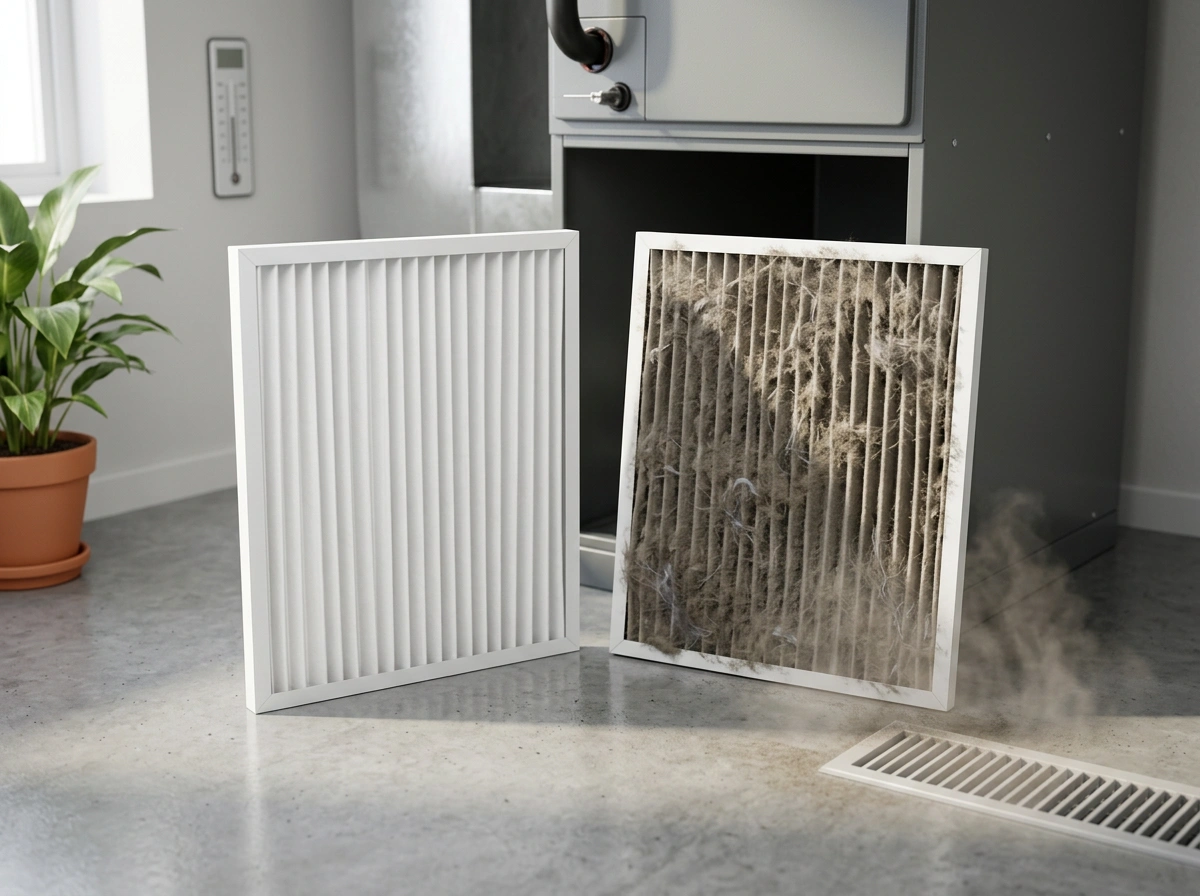
A central air conditioner relies on steady airflow to remove heat from the home. Return air travels through the filter before reaching the blower and evaporator coil. The filter captures dust, lint, pollen, pet dander, and other airborne particles that could collect on internal components. When the filter is clean, air moves through the system at the rate intended by the equipment manufacturer. When the filter becomes clogged with debris, airflow drops. Once that happens, cooling output often declines.
Reduced airflow changes how conditioned air is delivered to each room. Supply vents may still produce cool air, but the volume can be much lower than normal. Rooms farthest from the air handler often show the first signs of trouble. A bedroom at the end of the duct system may remain warmer than the rest of the house. Upper floors can feel uncomfortable during hot afternoons. Spaces that once cooled quickly may now take far longer to reach the thermostat setting. The system continues to operate, but it is no longer performing efficiently.
This becomes more obvious during the hottest part of the year. On mild days, a struggling system may still maintain acceptable indoor temperatures. During periods of high heat and humidity, the demand on the equipment increases. If airflow is already restricted by a dirty filter, the system has less capacity available when it is needed most. That is why many homeowners first notice the issue during peak summer conditions.
Comfort depends on more than the temperature shown on the thermostat. Proper airflow helps distribute conditioned air evenly throughout the home and supports effective humidity control. When airflow weakens, the indoor environment can feel stale or stuffy. Some rooms may feel cool while others feel damp or warm. In humid climates, moisture removal is a key part of indoor comfort. If the system cannot move enough air across the evaporator coil under normal conditions, indoor humidity can remain high. Many people describe this as a sticky or clammy feeling, even when the thermostat reading appears reasonable.
Dirty filters can also affect system run time. When cooling capacity drops, the thermostat takes longer to satisfy. This often leads to extended cooling cycles, especially in the afternoon and early evening when outdoor heat gain is strongest. Longer run times increase energy use because the blower motor and outdoor components operate for more minutes each day. Even a moderate decline in efficiency can become costly over an entire cooling season.
Indoor cleanliness can decline as well. A filter that is already loaded with debris has less surface area available to capture new particles. Dust may circulate more easily through the home, and sensitive occupants may notice greater irritation from airborne contaminants. Filters vary in efficiency and purpose, but regular replacement supports cleaner airflow and helps protect the inside of the equipment from buildup.
Many homeowners first connect the issue to their utility bill. Cooling equipment is one of the largest energy users in most homes. If the system must run longer to produce the same level of comfort, operating costs usually increase. The rise may appear gradual at first, which is one reason dirty filters are often overlooked. Some homeowners assume the weather or electric rates are solely responsible, when restricted airflow is also contributing to the problem.
The financial impact is not limited to monthly bills. Poor airflow can place extra strain on important components. The blower must work against higher resistance, and the evaporator coil may operate outside its preferred range. In severe cases, the coil can become too cold and begin to freeze. Ice buildup restricts airflow even further and can lead to water issues after thawing. A missed filter change can eventually turn into a repair visit and a larger expense.
How quickly a filter becomes dirty depends on the home itself. Pets often shorten filter life because fur and dander add to the particle load. Renovation projects can fill a filter quickly with fine dust. Homes near busy roads or construction areas may experience faster buildup. Frequent door openings, higher occupancy, and seasonal pollen can also increase indoor particles. For that reason, replacement schedules should be based on inspection and actual conditions rather than guesswork alone.
Filter selection also matters. A filter must fit properly and match the airflow needs of the system. Higher-efficiency filters can be helpful when selected correctly, but a filter that is too restrictive for the equipment can create airflow problems even when brand new. Correct sizing, proper installation, and timely replacement all matter. A quality filter installed incorrectly or left in place too long can still reduce performance.
The warning signs are usually clear once you know what to look for. Weak airflow from vents, uneven room temperatures, rising utility bills, excess indoor dust, long cooling cycles, and persistent humidity all deserve attention. A quick visual inspection can reveal a lot. If the filter looks clogged, gray, or heavily coated with debris, it is time to replace it with the correct size and type.
Routine maintenance adds another layer of protection. During a professional service visit, technicians can verify airflow, inspect the blower, examine the evaporator coil, clear the condensate drain, and identify issues that may resemble filter problems. Some homeowners replace the filter and still experience comfort concerns caused by duct leakage, thermostat issues, or other mechanical faults. Proper diagnosis helps solve the real issue instead of relying on trial and error.
For homeowners who value reliable cooling, a clean filter is one of the simplest and most effective maintenance habits available. It supports stronger airflow, steadier temperatures, better humidity control, lower operating costs, and reduced strain on the system. Few routine tasks offer as much value for so little time and expense.
If your home feels less comfortable than it should or your cooling costs continue to rise, schedule a service with Gulf Coast Heating & AC. Our team can inspect your system, correct airflow issues, and help restore efficient, dependable performance.
We are located here:

