

When your air conditioner is running, but the house still feels warm, the issue is often more complex than it appears. Many homeowners hear the fan, see the thermostat set to cool, and assume the system is operating normally. In reality, air conditioning depends on several processes happening at once. Air must move freely, refrigerant must circulate correctly, coils must transfer heat efficiently, and electrical controls must respond at the right time. If one part of that sequence fails, the equipment can continue running while indoor comfort declines. The result is a system that sounds active, runs longer than usual, and leaves the home warmer than expected.
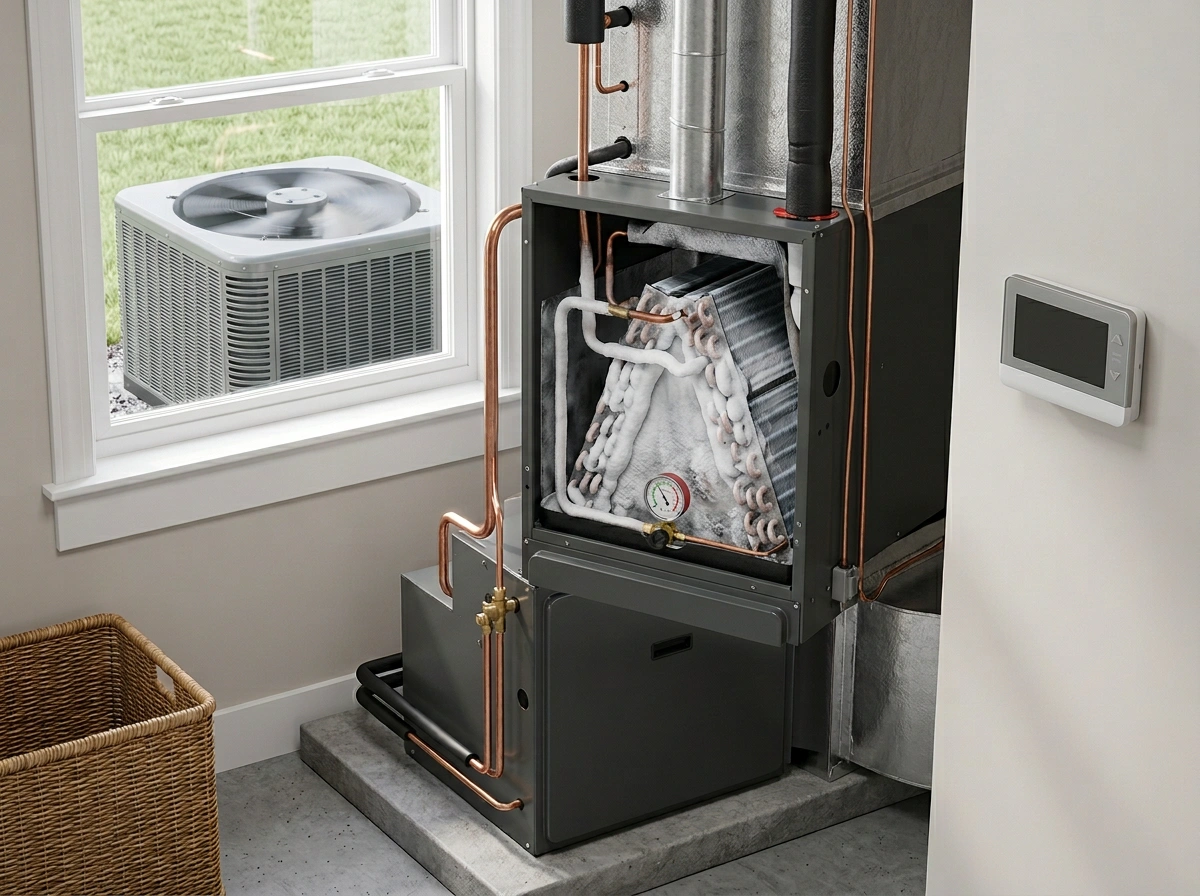
One of the first areas technicians inspect is the air filter. A dirty filter restricts airflow, and reduced airflow affects the entire system. The evaporator coil relies on a steady stream of warm indoor air passing across its surface. When that airflow drops, the coil can become too cold, condensation can freeze, and cooling capacity falls quickly. Homeowners may notice weak airflow at the vents, uneven temperatures, or rooms that never seem to cool properly. Replacing a clogged filter is simple maintenance, but it plays a major role in system performance.
Frozen evaporator coils can create a frustrating cycle. The house feels warm, so the thermostat is lowered again and again. At the same time, ice forms on the coil and blocks the airflow needed to cool the home. Once that happens, the system may run continuously with little improvement indoors. Freezing usually points to poor airflow, refrigerant problems, or blower issues. The ice itself is rarely the true cause. It is usually a warning sign of a deeper problem.
Ductwork can also be responsible for cooling loss. Even when the air conditioner is producing cold air, that air must travel through ducts before it reaches the living space. Loose connections, torn flexible ducts, crushed sections, and missing insulation can all reduce delivery. In some homes, a large portion of conditioned air is lost before it reaches the rooms where it is needed. The system keeps running, energy use rises, and comfort remains out of reach.
The outdoor condenser plays an essential role in cooling the home. It releases the heat collected from indoor air. When the outdoor coil is covered with dirt, grass, leaves, or coastal residue, heat cannot escape efficiently. Operating pressures increase, run times become longer, and cooling output declines. Homeowners sometimes focus only on the indoor equipment, but the outdoor unit carries a heavy share of the workload. Keeping the area clear and scheduling professional coil cleaning can improve performance.
Low refrigerant is another common reason an AC runs without cooling well. Refrigerant moves through a sealed system, so low levels usually indicate a leak or an installation error. When the charge is incorrect, the system cannot absorb enough indoor heat or release enough heat outdoors. Signs may include warm air from vents, ice on the refrigerant line, hissing sounds, or extended cooling cycles. Simply adding refrigerant without repairing the source of the leak only postpones the issue. Proper service includes locating the leak, repairing it, and charging the system to the manufacturer’s specifications.
Electrical failures can create confusing symptoms. Air conditioners depend on motors, capacitors, contactors, relays, circuit boards, and safety controls. In some cases, the indoor blower operates while the outdoor condenser does not start. Air still moves through the vents, but it is not being cooled. A weak capacitor may cause intermittent starts, while a worn contactor may prevent the compressor from engaging consistently. To a homeowner, the system may appear to be running even though a critical component has failed.
Thermostat issues are another frequent source of cooling complaints. A thermostat can look normal while providing inaccurate readings or poor commands. Placement matters. If it is located near direct sunlight, kitchen heat, or a drafty hallway, the temperature it senses may not reflect the rest of the home. Low batteries, worn sensors, and incorrect programming can also create problems. Many service calls that seem like equipment failures begin with thermostat errors.
System sizing also has a direct effect on comfort. An oversized unit may cool the thermostat area quickly and shut off before removing enough humidity. The house can feel cool but damp. An undersized unit may run for long periods during hot weather and still struggle to reach the set temperature. Proper sizing requires a load calculation that considers insulation, windows, orientation, occupancy, air leakage, and local climate. Square footage alone cannot determine the right equipment size.
There are times when the air conditioner is functioning properly, but the home is gaining heat faster than the system can remove it. Strong sunlight through windows, attic heat, poor insulation, and frequent door openings can increase the cooling load significantly. During the hottest days of the year, even a well-maintained system may run longer because conditions inside the home have changed. Better insulation, air sealing, and window shading can help reduce that burden.
Routine maintenance remains one of the best ways to prevent these issues. During a professional service visit, technicians inspect electrical components, clean coils, check airflow, verify refrigerant performance, clear drain lines, and catch small problems before they grow into major repairs. Many cooling failures begin as minor issues that could have been corrected early.
If your air conditioner is running but your home still is not cooling the way it should, accurate diagnosis is the key to restoring comfort. Gulf Coast Heating & AC can identify the cause, explain the repair clearly, and help your system perform reliably again. Schedule a service today and get your cooling system back on track.
We are located here:

