

In humid regions, air conditioning performance is shaped as much by moisture control as by temperature reduction. Homeowners often notice that their AC systems run for long stretches during summer yet still leave rooms feeling heavy or uncomfortable. This is not a matter of inadequate equipment or unrealistic thermostat settings. High humidity changes how an air conditioning system operates, increasing the workload on key components and exposing small issues that might otherwise go unnoticed. Understanding why this happens helps explain why routine maintenance remains one of the most effective tools for maintaining comfort, efficiency, and long-term reliability.
An air conditioner cools indoor spaces by drawing warm air across the evaporator coil, where heat is absorbed and moisture condenses into liquid water that drains away. This process reduces both temperature and humidity, which together determine how comfortable a space feels. When humidity levels are moderate, moisture removal occurs efficiently within normal operating cycles. As humidity rises, the amount of water vapor in the air increases, and the system must work longer to extract it.
This extended operation explains why homes can feel damp even when the thermostat indicates the desired temperature has been reached. Temperature alone does not define comfort. Moist air holds heat differently and slows the body’s natural cooling process. Lowering the thermostat in these conditions often leads to longer runtimes without meaningful improvement in comfort. The system expends more energy removing heat while struggling to keep up with the added moisture load, increasing strain on components and driving up operating costs.
The evaporator coil plays a central role in this process. Its ability to remove moisture depends on proper temperature, clean surfaces, and balanced airflow. When these conditions are met, humidity control remains stable even during demanding weather. When they are not, dehumidification slows and comfort declines, regardless of how long the system runs.
High humidity has a way of revealing underlying system issues. Airflow restrictions are among the most common. Dirty filters, blocked return vents, or duct obstructions reduce the amount of air moving across the evaporator coil. With reduced airflow, the system struggles to condense moisture effectively and may experience uneven cooling or coil icing. These problems often appear first during prolonged humid weather, when the system is under sustained demand.
Coil condition is another factor that becomes critical. Over time, evaporator coils collect dust and debris from circulating air. In humid environments, this buildup adheres more readily to damp surfaces, forming a layer that interferes with heat transfer. Even light contamination can reduce the coil’s ability to remove moisture, forcing longer runtimes and diminishing comfort.
Humidity also places heavy demand on the condensate drainage system. During peak cooling periods, an air conditioner can remove several gallons of moisture from indoor air each day. This water must drain freely. Algae growth or debris in the drain line can cause backups, leading to water damage or system shutdowns triggered by safety controls. These issues often occur suddenly during extended humid conditions.
Refrigerant performance becomes more noticeable as well. Proper refrigerant levels allow the evaporator coil to reach the temperatures needed for effective cooling and moisture removal. Low refrigerant charge, often caused by leaks, reduces this capability. The system may run continuously while indoor air remains damp, a clear sign that dehumidification has been compromised.
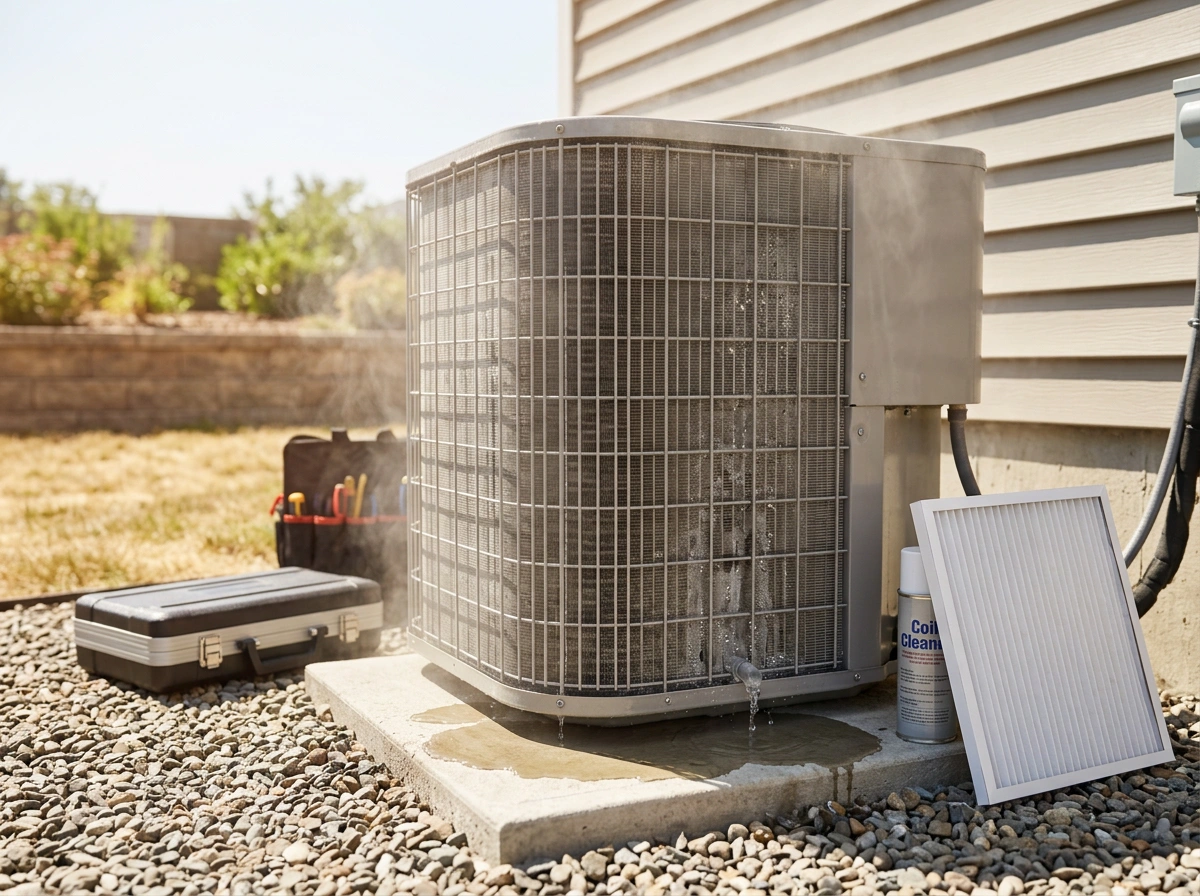
Outdoor conditions add another layer of stress. High humidity frequently coincides with extreme heat, making it harder for the condenser to release heat into the surrounding air. Dirty condenser coils or restricted airflow around the outdoor unit increase operating pressures, reduce efficiency, and accelerate wear on major components.
Routine maintenance targets the exact factors that cause air conditioners to struggle in humid weather. Professional cleaning of evaporator and condenser coils restores proper heat transfer, allowing the system to remove moisture efficiently and reject heat effectively. Clean coils reduce runtime, improve comfort, and stabilize performance during periods of high humidity.
Airflow inspections and filter replacement ensure that the correct volume of air moves through the system. Proper airflow supports consistent dehumidification, prevents coil icing, and improves overall system balance. Duct inspections can identify leaks or restrictions that undermine humidity control and contribute to uneven cooling.
Condensate system service is especially important in moisture-heavy climates. Clearing drain lines and inspecting drain pans helps prevent backups, shutdowns, and water-related damage. These steps protect both the HVAC system and the surrounding structure during the most demanding months of the year.
Refrigerant checks confirm that the system operates within manufacturer specifications. Identifying leaks early preserves the system’s ability to manage heat and moisture while protecting the compressor from long-term damage. Electrical inspections further enhance reliability by identifying worn components that may fail under extended runtime.
Maintenance also supports better indoor air quality. Effective moisture control reduces conditions that allow mold and mildew to develop. Clean components and balanced airflow limit contaminant circulation, contributing to a healthier indoor environment alongside improved comfort.
When humidity is treated as a core performance factor rather than a secondary concern, air conditioning systems operate more predictably and efficiently. Regular maintenance reduces the need for constant thermostat adjustments, lowers energy use, and extends equipment life. What often feels like a seasonal struggle becomes a manageable operating condition when the system is properly cared for.
If your air conditioner struggles to keep up as humidity rises, professional service can restore balance and performance. The technicians at Gulf Coast Heating & AC understand how humid conditions affect cooling systems and how targeted maintenance improves comfort and reliability. Schedule a service visit to protect your equipment, improve indoor comfort, and keep your cooling system performing consistently through the most demanding weather of the year.
We are located here:

